No user accounts required for your recipients -
Start your 7-day free trial now!

A 5-step framework that lets universities reliably weigh the costs, savings, and reach of digital certificates against one another



Every semester, thousands of degree certificates leave the university administration, a large share of them still through manual processes that cost money for printing, mailing, and extra work hours. Before a university switches to digital certification for higher education institutions, the administration usually wants to see one number: does it really pay off?
That is where a structured ROI calculation comes in. The following shows you how to capture implementation costs, put the resulting benefit into numbers, and derive the ROI of digital certificates in five comprehensible steps.
The starting point is a complete overview of your previous expenses. This includes printing costs per certificate, mailing fees, the staff effort for manual creation, and the time that replacement requests tie up. The hidden costs are often underestimated here, for example the hours a team spends each semester just coordinating between the examination office and the print shop.
Set against that is the investment in a digital certification platform. It usually consists of three items:
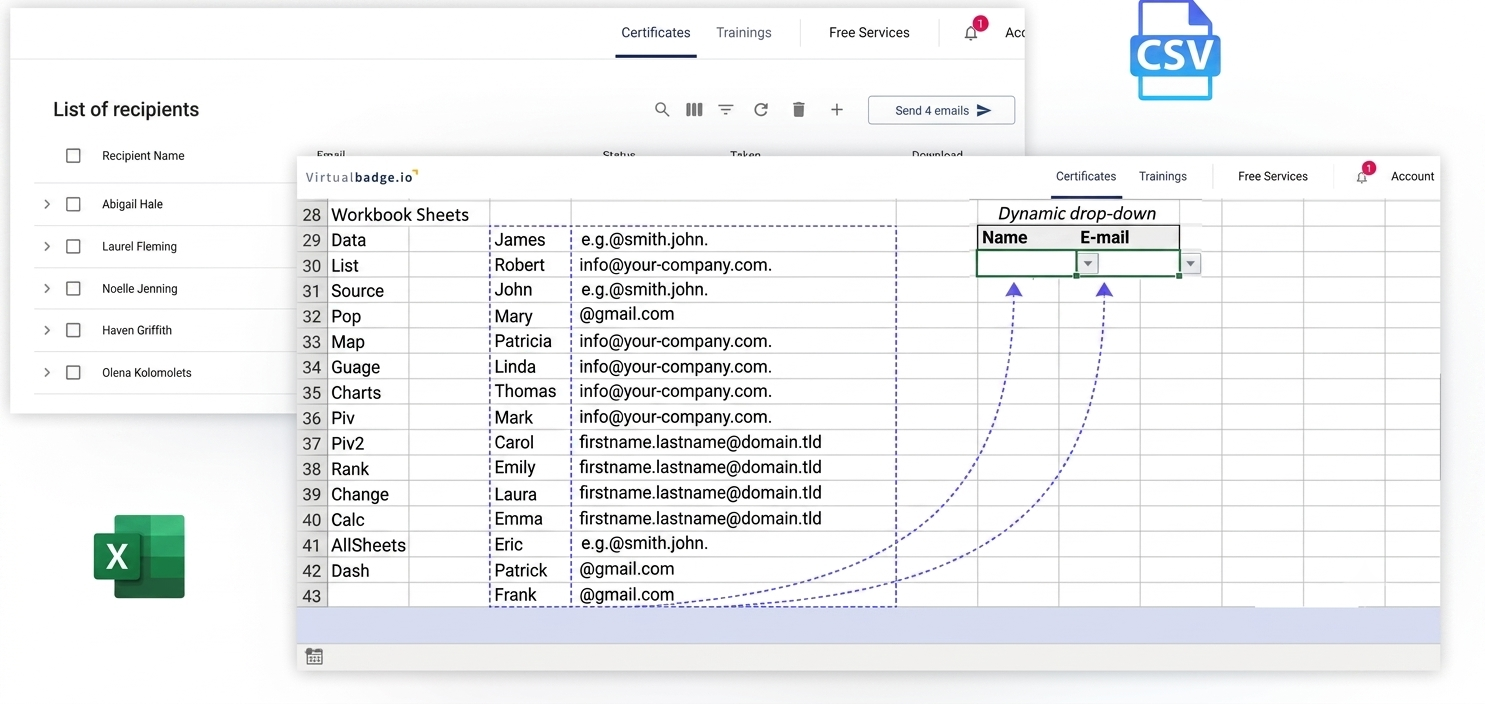
The more issuers are involved, the more a central management system with clearly defined roles and approval processes counts.
A comparison of the ongoing costs between the analog and digital process quickly shows where the money lies:
Harder to express in euros, but just as real, is the additional benefit of digital certificates. When graduates share their certificate on LinkedIn, organic reach is created for the university. The Micro-Credentials Impact Report 2026 by Coursera states that 91 percent of students are more motivated through industry-recognized credentials. For your own calculation, the value of the LinkedIn impressions can be roughly estimated: if 20 percent of recipients share, with an average of 300 views per share, 2,000 certificates result in around 120,000 impressions per semester.
The classic formula: total benefit minus total costs, divided by total costs, times 100. Total benefit includes both direct savings and the monetized indirect benefit equally. If 25,000 EUR in annual savings stands against an 8,000 EUR investment, the calculation results in an ROI of 212.5 percent in the first year. Viewed over several years, the value turns out even more clearly, because the implementation costs only occur once, while the savings recur every semester.
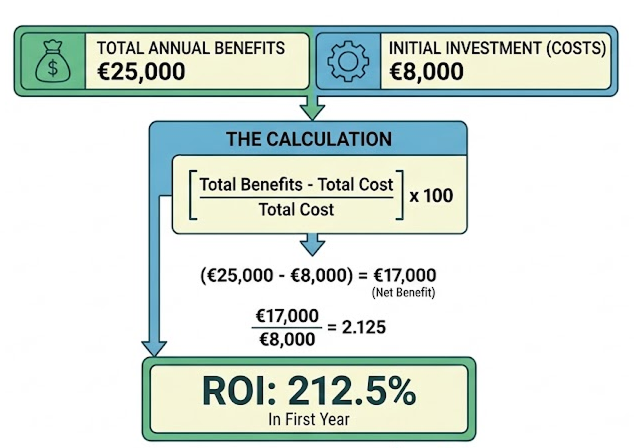
A single figure rarely carries a budget decision on its own. It is more sensible to build at least three scenarios:
The figures belong in a clearly structured business case, complemented by the strategic arguments that decision makers at universities care about besides pure cost reduction:
%201.png)
A concrete example makes abstract figures tangible. SIZ AG achieved an ROI of 400 percent in the first year after digitizing its certificate issuance, as the success story shows, partly because tamper-proof validation pages noticeably reduced the support effort for inquiries.
Virtualbadge.io is the platform for tamper-proof digital certificates and Open Badges at universities. Verifiable degree certificates can be created, sent, and managed with a single click, and graduates share them directly on LinkedIn. The integrated analytics dashboard delivers real-time data on retrieval rates, downloads, and social sharing activity, so ROI can not only be calculated once but tracked and optimized continuously.
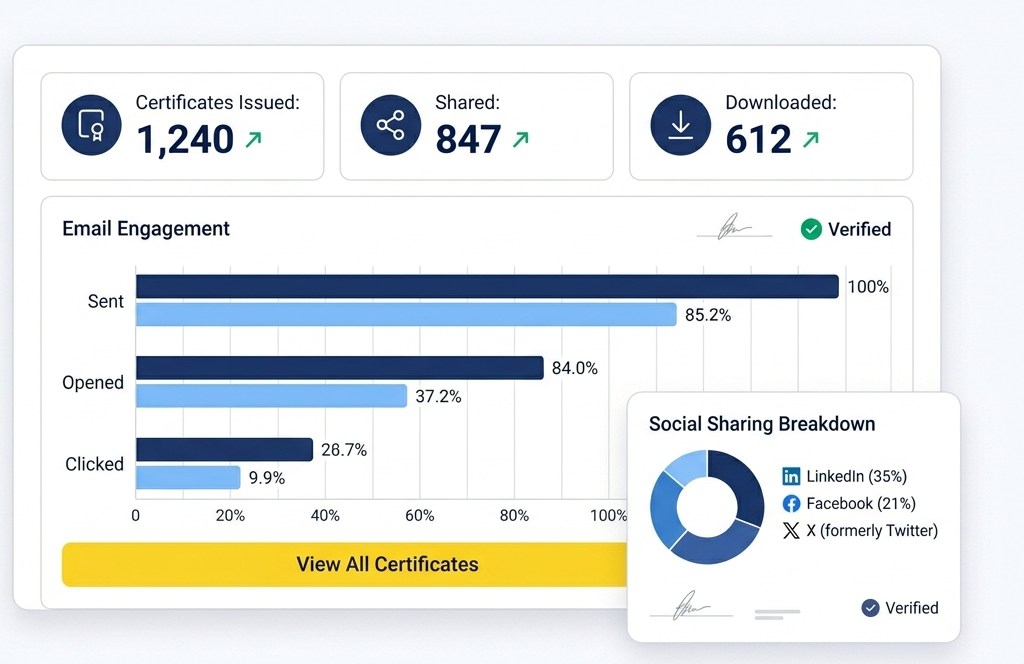
For more information, read: How to Measure the ROI of Digital Credentials
The platform connects to existing learning management systems via API, Zapier, or CSV import, and is GDPR compliant. Book a free demo now and calculate the ROI for your university.
What is the ROI of digital university certificates?
It describes the ratio of savings and added value to the investment in a digital certification solution: direct cost reduction on printing and mailing on one side, indirect benefits such as reach and fraud protection on the other.
From when does a digital certification solution pay for itself?
Adding up direct savings and time gained, the investment pays for itself at most universities already in the first year, since the manual effort per certificate shrinks to a few seconds.
How do I factor the value of LinkedIn visibility into the ROI?
One approach is the media equivalent value: what would the same number of impressions cost through paid ads? Virtualbadge.io automatically tracks how often certificates are shared and viewed, so organic reach becomes part of your own calculation.
* You can find the organisation ID in the URL when you access your LinkedIn Company page as an admin.


Marketing

Sep 17, 2026

6 min
A note on how we write: we use AI tools to help with research and drafting. Every article is then reviewed, edited and fact-checked by someone on the Virtualbadge.io team before it goes live. The final word is always human.

Use Virtualbadge.io to design and send digital certificates that create trust - in less than 10 minutes.
%20(1).svg)