No user accounts required for your recipients -
Start your 7-day free trial now!

Structured digital credentials turn vague certificate titles into verified, machine readable competency data for HR teams and certification bodies.


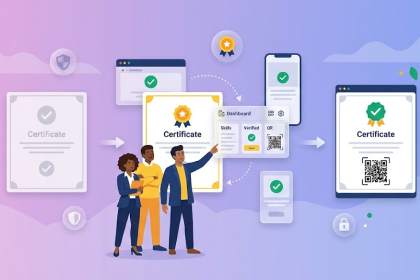
Name, course title, date. That is usually all that appears on a digital certificate. What was actually assessed, which criteria the evaluation was based on, and whether the credential is still valid at all often remains unclear. If a recruiter receives a certificate titled "Advanced First Aid Training," they can hardly tell whether the person performed resuscitation procedures under exam conditions or simply sat through a lecture.
The reason lies in the design of most certificate systems: they were built to confirm attendance, not to capture skills in a structured way. If machine readable fields for learning outcomes or assessment standards are missing, an employer would technically need to contact the issuer. As the number of applicants grows, that rarely happens in practice, so certificates are then only checked superficially or skipped entirely. This significantly limits comparability for employers and leaves the actual quality of certification programs invisible to the outside.
Instead of hiding information in a static document, structured digital credentials embed verifiable metadata directly into the certificate. This typically includes:
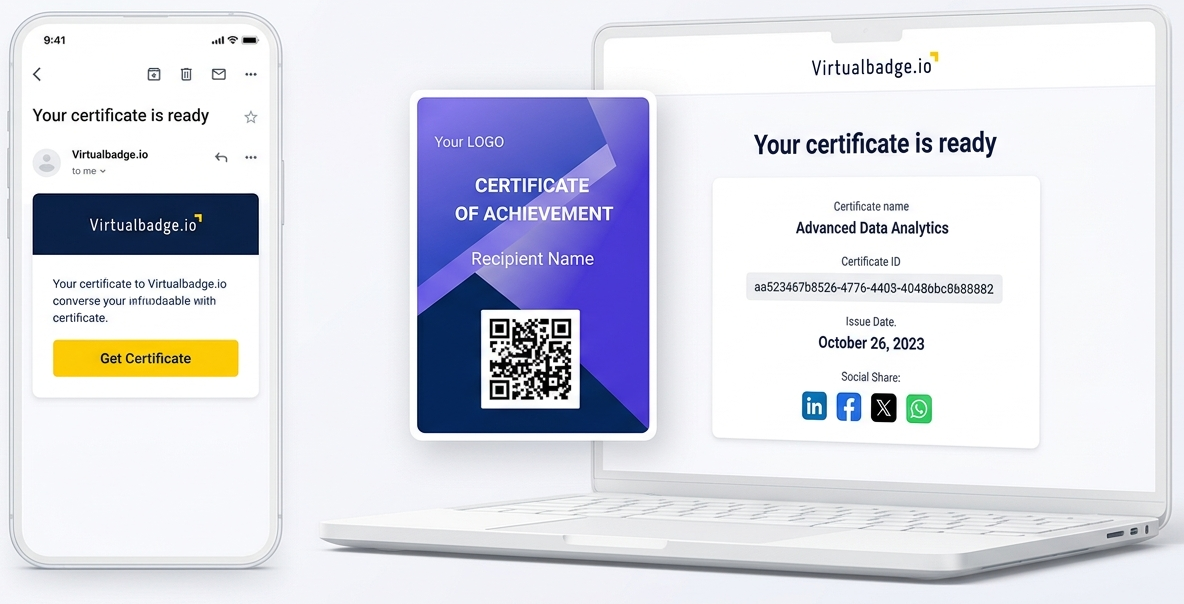
Because this information exists in an open, standardized format, both people and machines can read it. HR systems import the data automatically and enrich candidate profiles with it directly. With the European Digital Credentials for Learning, the EU has already created a framework for exactly this kind of machine verifiable credential, enabling comparability across national borders.
When a certificate documents concrete skills instead of just a course title, the quality of competency data in HR systems changes noticeably. Recruiters compare candidates based on verified, proven abilities instead of relying on vague titles or having to ask follow up questions. Certification bodies, in turn, make the quality of their programs visible, which turns it into a genuine differentiator in the competition for participants.
For more information, read: Integrating Digital Accreditation into HR and LMS Systems 2026
The starting point is not technology, but clearly defined learning outcomes and assessment standards. Before a certificate is issued, it should be clear which skills are being assessed, according to which criteria, and what a successful completion actually means.
How this affects administrative workload is shown by first aid training provider IMN Training: processing time per certificate dropped significantly with structured, automatically issued credentials, as described in their success story.
Virtualbadge.io combines professional certificate design with structured, verifiable competency data. Certificates and Open Badges can be equipped with learning outcomes, assessment criteria, and validity periods, each with a QR code for instant validation by employers and HR teams.
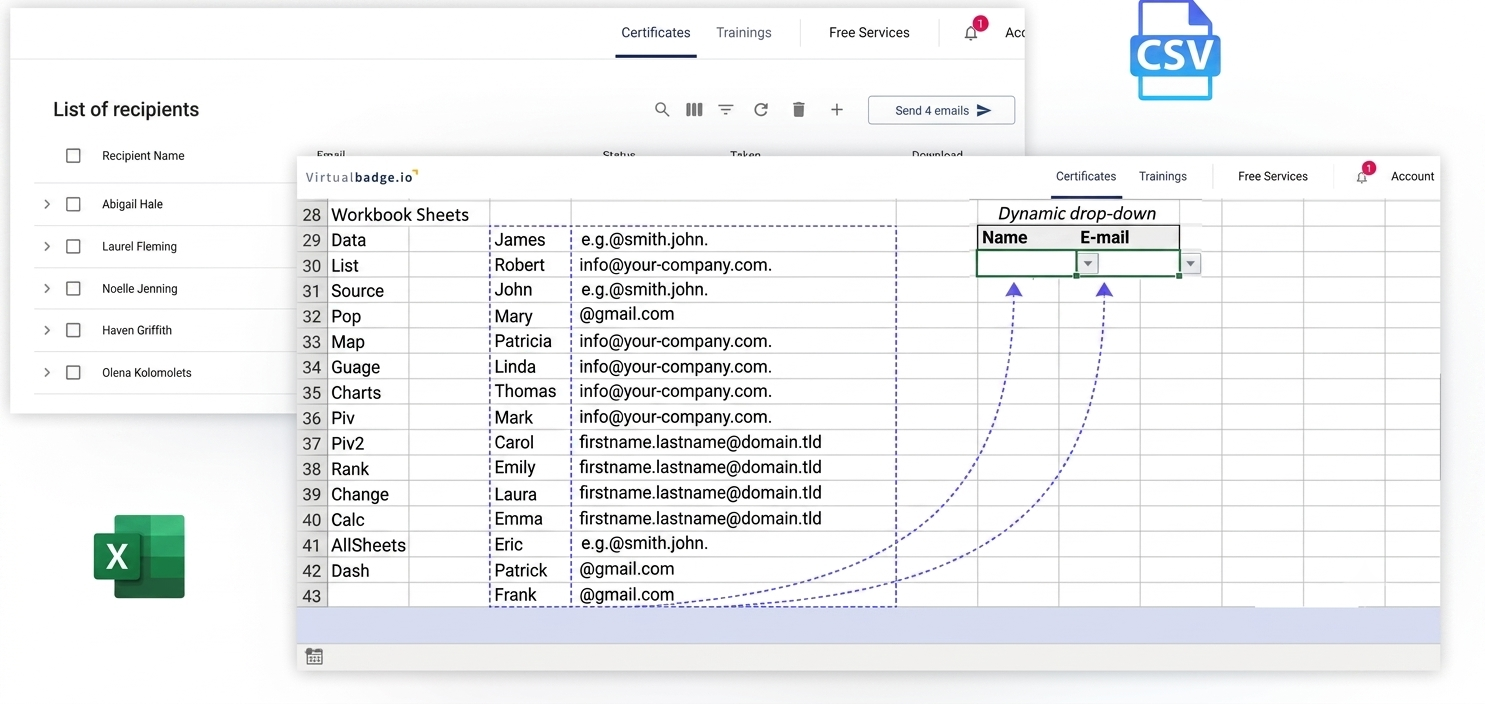
Issuance runs automatically, through CSV upload or via API connection to existing exam systems. This keeps competency data consistent and error free in every certificate while reducing administrative effort at the same time. The platform supports GDPR compliant processes and is also suitable for organizations working under eIDAS aligned standards that require tamper proof, digitally signed credentials.
See how easily structured, precise competency credentials can be issued with Virtualbadge.io. Book a free demo and make your certificates' competency data immediately usable.
Why do digital certificates often lead to incomplete competency data?
Many certificates contain only a course title and a date, but no structured details on the skills that were assessed. HR teams cannot derive usable competency data from that.
What sets structured digital credentials apart from traditional certificates?
Structured credentials embed verifiable metadata such as learning outcomes, assessment criteria, and validity periods directly. Virtualbadge.io makes this data verifiable through a QR code.
Can structured credentials be integrated into existing HR systems?
Yes. Machine readable metadata can be imported automatically. Virtualbadge.io supports integration via API and CSV upload.
* You can find the organisation ID in the URL when you access your LinkedIn Company page as an admin.


Marketing

Sep 17, 2026

5 min
A note on how we write: we use AI tools to help with research and drafting. Every article is then reviewed, edited and fact-checked by someone on the Virtualbadge.io team before it goes live. The final word is always human.

Use Virtualbadge.io to design and send digital certificates that create trust - in less than 10 minutes.
%20(1).svg)