No user accounts required for your recipients -
Start your 7-day free trial now!

Understanding pitfalls to avoid so your badge initiative drives engagement, trust and measurable impact


Many organizations introduce digital badges without clearly defining why they are issuing them. Badges are often added on top of existing programs without a clear goal or long term plan.
Digital badges work best when they are used as a strategic tool to recognize skills, motivate learners, and communicate value to external audiences.
Common signs of this mistake
How to avoid this mistake
If you want a clearer understanding of how digital badges work and how to use them strategically, read the article: Digital Badges Explained.

A digital badge is more than just an image. Its value comes from clear design, structured information, and reliable metadata. When these elements are missing, badges lose credibility.
What often goes wrong
How to avoid this mistake
If you want to learn how strong design and metadata increase badge adoption and sharing, read Digital Badges for LinkedIn: How to Make Your Course Stand Out
Many organizations focus heavily on issuing digital badges but forget that badges only create value when they are seen and shared. Without a clear promotion plan, even well designed badges remain invisible.
Typical signs of this mistake
Why this limits impact
How to avoid this mistake

If you want to understand how badges can be used before, during, and after courses or events, read How to Use Digital Badges Before, During, and After Your Event.
Another common mistake is managing digital badges separately from existing tools and workflows. When badges are not integrated, manual work increases and scalability becomes difficult.
Typical signs of this mistake
Why this becomes a problem
How to avoid this mistake
If you want to see how automation and integrations simplify badge management, you can read Create and Automate Webinar Certificates.
The final and often most damaging mistake is treating digital badges as simple visuals instead of verifiable credentials. If recipients, employers, or partners cannot easily verify a badge, its value drops significantly.
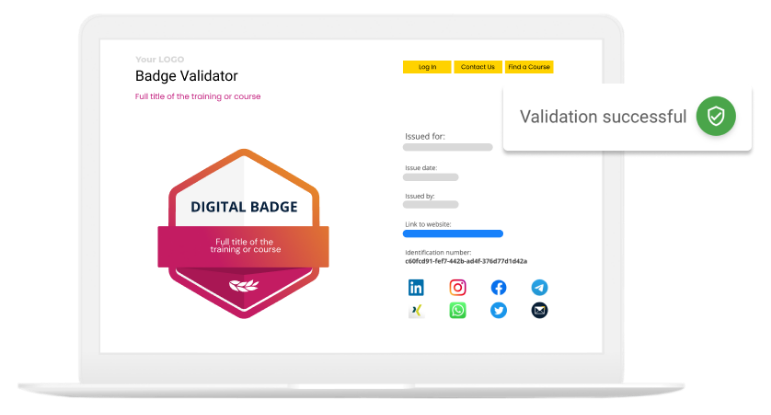
Digital badges must clearly communicate who issued them, what was earned, and how the information can be verified. Without this, badges fail to build trust.
Typical signs of this mistake
Why this matters
How to avoid this mistake
Avoiding these common mistakes makes the difference between a badge program that looks good on paper and one that drives real engagement, trust, and visibility.
With Virtualbadge.io, you can:
If you want to see how this works in practice and discuss your specific use case, schedule a free demo with our team.
* You can find the organisation ID in the URL when you access your LinkedIn Company page as an admin.


Marketing

Jan 22, 2026

4 min
A note on how we write: we use AI tools to help with research and drafting. Every article is then reviewed, edited and fact-checked by someone on the Virtualbadge.io team before it goes live. The final word is always human.

Use Virtualbadge.io to design and send digital certificates that create trust - in less than 10 minutes.
%20(1).svg)