No user accounts required for your recipients -
Start your 7-day free trial now!

How artificial intelligence, micro-credentials, and verifiable digital badges are reshaping education and skill recognition in 2026


Digital credentials are redefining how skills and achievements are recognized. Traditional paper and PDF certificates are being replaced by dynamic, verifiable credentials that offer real value.
Why digital credentials matter in 2026:
Modern certificates:
This shift is more than digitalization. It’s a smarter, more connected system. And it starts with the rise of artificial intelligence.
AI is revolutionizing credentialing by automating processes and reducing errors, making issuing certificates faster and smarter.
How AI improves credentialing:
Benefits for institutions:
Example
As highlighted in the article: AI in Education: How AI Is Shaping Digital Credentialing, AI-driven tools already help training providers issue credentials at scale. Securely and efficiently.
In 2026, smart automation is no longer optional. It’s essential.
In 2026, micro-credentials are no longer a niche concept. They are now a core element of modern education. Unlike traditional degrees, they focus on specific skills and are ideal for short, flexible learning formats.
Why learners and employers value micro-credentials:
Common use cases:
Many education providers report that issuing micro-credentials increases learner engagement and encourages social sharing. These digital badges often appear on LinkedIn profiles, where they attract the attention of recruiters and peers.
Key takeaway:
Micro-credentials help education providers stay competitive and meet the demands of a dynamic labor market.
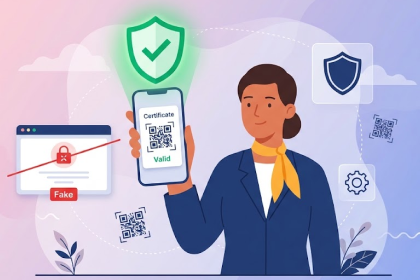
One of the strongest trends in digital credentialing is the move toward verifiable and shareable badges. Static PDFs are often hard to validate and easy to fake. Digital badges solve this problem by offering instant verification and better visibility.
What makes verifiable badges effective:
Benefits for learners and institutions:
Real-world example:
As highlighted in the article: Digital Badges Build Trust: Verifiable Credentials Explained, shareable badges help education providers build trust and expand their presence across digital channels.
In 2026, digital credentials play a growing role in how companies hire and develop talent. Employers are shifting from degree-based hiring to skills-based hiring, where verified credentials serve as trusted proof of ability.
How credentials support hiring and HR:
For education providers, this creates new opportunities:
Strategic advantage:
Training providers that issue verifiable credentials aligned with workplace needs position themselves as valuable partners. A strong example is the TQI Case Study, where an IT company uses digital badges not only for training validation but also as part of its recruitment strategy. These credentials help identify qualified candidates faster and improve employer branding at the same time.
Key insight:
Credentials are no longer just academic. They are strategic assets in workforce planning and talent development.
As digital credentialing expands, interoperability and standardization are critical. Learners collect credentials from multiple sources, so seamless integration across platforms is essential.
Why standards matter:
Important frameworks in 2026:
Benefits of interoperability:
Further reading:
To understand how these technical standards translate into practical use, explore the article: Complete Overview of Digital Certificates and Badges on Virtualbadge.io.
The future of credentialing is already here. As we’ve seen, trends like artificial intelligence, micro-credentials, verifiable badges, HR integration, and interoperability are not just shaping how certificates are issued. They are redefining the value of learning itself.
Key takeaways for education providers:
Ready to modernize your certification process?
Book a free demo with Virtualbadge.io and discover how digital credentials can work for your organization.
* You can find the organisation ID in the URL when you access your LinkedIn Company page as an admin.


Marketing

Jan 26, 2026

4 min
A note on how we write: we use AI tools to help with research and drafting. Every article is then reviewed, edited and fact-checked by someone on the Virtualbadge.io team before it goes live. The final word is always human.

Use Virtualbadge.io to design and send digital certificates that create trust - in less than 10 minutes.
%20(1).svg)