No user accounts required for your recipients -
Start your 7-day free trial now!

Understanding the rise of micro‑credentials and how digital badges are transforming the way skills are recognized, verified, and shared.


Truth be told: Traditional degrees and long-form training programs are often too slow or too general to keep up with rapidly evolving job requirements. Employers, educators, and learners alike are turning to more agile, targeted ways of recognizing skills.
This is where micro-credentials come in – compact, verifiable learning achievements that demonstrate specific competencies.
Micro-credentials are small, focused certifications that prove someone has gained a specific skill or knowledge area. Unlike traditional qualifications, they are:
As micro-credentials gain traction, digital badges have become one of the most effective ways to issue and recognize them. A digital badge is more than just a visual symbol – it is a verifiable, data-rich credential that provides detailed information about the skill or achievement it represents.
What makes digital badges unique?
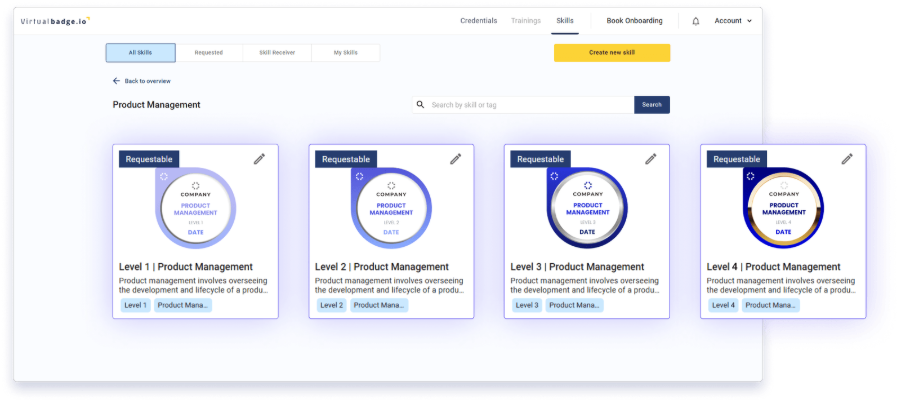
Digital badges contain embedded metadata that typically includes:
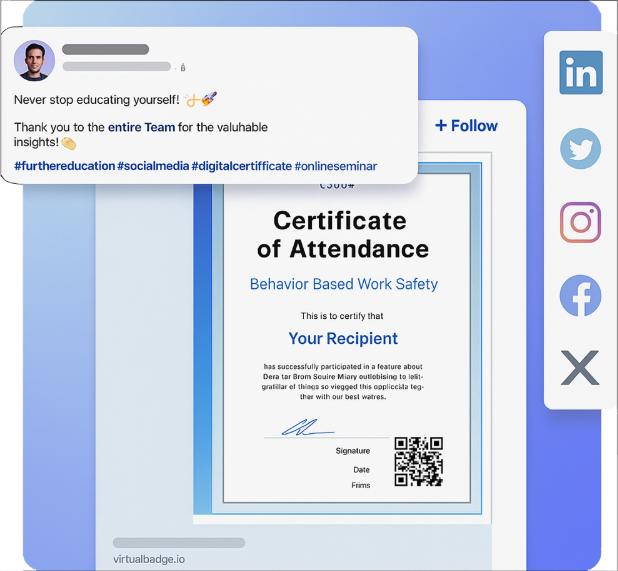
These badges can be shared on LinkedIn, embedded in email signatures, or added to digital resumes – making achievements more visible and impactful.
Why are digital badges replacing traditional certificates?
To learn more about how digital badges actually work and why they offer more than just visual appeal, check out our guide:
Digital Badges Explained – What They Are and How They Work
The Open Badges standard
Many digital badges follow the Open Badges standard, a globally recognized format that ensures consistency across platforms. This standard boosts credibility and interoperability, making micro-credentials more portable and trustworthy.
Key benefits at a glance
Micro-credentials and digital badges are more than just modern alternatives to traditional certificates – they offer tangible value for learners, educators, and employers alike. By making skills visible, verifiable, and shareable, they support a more transparent and flexible learning and work environment.
Benefits for learners
Benefits for training providers and educators
Benefits for employers
Why this matters now
In a time where digital skills evolve rapidly and transparency is critical, digital badges help all parties involved focus on real, demonstrated capabilities. They reduce the gap between learning and career development and allow skills to be recognized across industries and borders.
Micro-credentials and digital badges are already being used across various sectors to recognize learning outcomes, boost engagement, and build trust.
They are applied in areas such as:
These use cases show that micro-credentials are not limited to formal education. They are part of a broader trend toward modular, learner-centered recognition that adapts to different goals and formats.
To see how organizations across industries are already benefiting from digital credentials, visit our Success Stories Page. These examples illustrate how digital badges can be applied in real-world scenarios, from internal learning paths to large-scale training programs.
Adopting micro-credentials and digital badges in your organization does not have to be complicated. With the right tools and a clear framework, you can start offering verifiable, modern credentials that add real value to your learners and boost the visibility of your programs.
Key steps to get started
Best practices for long-term success
By implementing a structured badge system, you’re not just improving your learner experience – you're also strengthening your brand visibility, building trust, and demonstrating innovation in education or training delivery.
If you're looking to start offering micro-credentials in a simple, secure, and effective way, Virtualbadge.io is here to help.
👉 Schedule a free demo and discover how easy it is to create, automate, and manage digital credentials that make a real impact.
* You can find the organisation ID in the URL when you access your LinkedIn Company page as an admin.


Marketing

Jan 22, 2026

6 min
A note on how we write: we use AI tools to help with research and drafting. Every article is then reviewed, edited and fact-checked by someone on the Virtualbadge.io team before it goes live. The final word is always human.

Use Virtualbadge.io to design and send digital certificates that create trust - in less than 10 minutes.
%20(1).svg)