No user accounts required for your recipients -
Start your 7-day free trial now!

What the eIDAS 2.0 Regulation and the EU Digital Identity Wallet mean for digital certificates and badges, and how organizations can prepare now.



The eIDAS 2.0 Regulation, officially Regulation (EU) 2024/1183, has been in force since May 20, 2024 and is changing how identities and credentials are managed digitally in Europe. At its core is the EU Digital Identity Wallet, or EUDI Wallet for short: an app that allows citizens to store, control and present their identity and personal credentials themselves, across borders.
The deadline is legally binding: By December 24, 2026, each of the 27 EU Member States must provide at least one certified EUDI Wallet. Member States can offer the wallet themselves, commission an external party, or recognize a wallet from the private sector.
Going forward, citizens should be able to store the following credentials in the wallet, among others:
Annex VI of the Regulation shows how central educational and professional credentials are: Educational degrees and professional qualifications are explicitly included on the minimum list of attributes whose authenticity should be electronically verifiable against the relevant authentic sources.
For organizations that issue certificates and badges, there is no specific legal deadline. However, the pressure comes from the market: As soon as citizens have the wallet on their smartphones, credentials that cannot be stored and verified there will quickly fall behind.
The roadmap can be summarized in two phases:
The state of implementation varies significantly between Member States. While some countries officially confirm the deadline, others are signaling delays or limited functionality at launch. In Germany, the state EUDI Wallet is scheduled to launch on January 2, 2027, according to the Federal Ministry for Digital Transformation and Government Modernization.
The binding technical requirements are set out in the European Commission’s implementing regulations. The Architecture and Reference Framework (ARF) describes the overall architecture and has been available in version 3.0 since July 2026. As part of the Digital Decade, the EU is also pursuing the goal that around 80 percent of citizens use a digital identity solution by 2030.
The legal framework can be read in detail in Regulation (EU) 2024/1183, as well as in the European Commission’s official Architecture and Reference Framework.
For more information, read: EUDI Wallet Memorandum of Understanding
For issuers of digital certificates and badges, the EUDI Wallet means one thing above all: Credentials must be structured so that they can be transferred into a wallet, stored there and verified independently by third parties. A simple PDF or image is not enough.
Technically, the EUDI Wallet relies on two formats: SD-JWT VC and ISO mdoc. The W3C Verifiable Credentials Data Model 2.0, an official W3C standard since May 2025, is provided as an optional format for non-qualified credentials. What these open standards have in common is what matters most for digital credentials:
Organizations that already build their certificates on open standards today will save themselves a costly migration later. For issuing directly into the EUDI Wallet, the OpenID4VCI issuance protocol and the wallet formats are then added.
For more information, read: W3C VC Standard: The Future of Verifiable Digital Credentials
There is not much time left before the wallet reaches citizens. Anyone issuing certificates, badges or qualification credentials today should break the transition down into concrete steps:
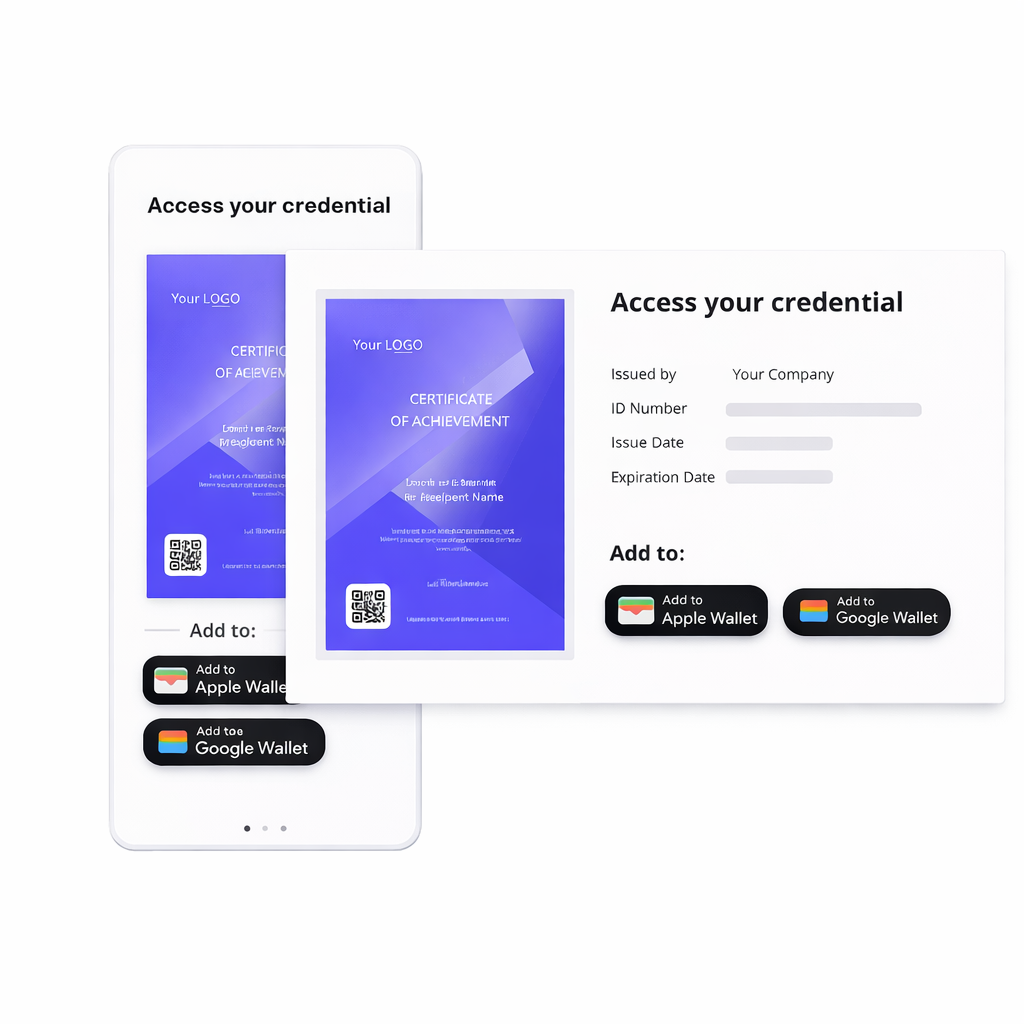
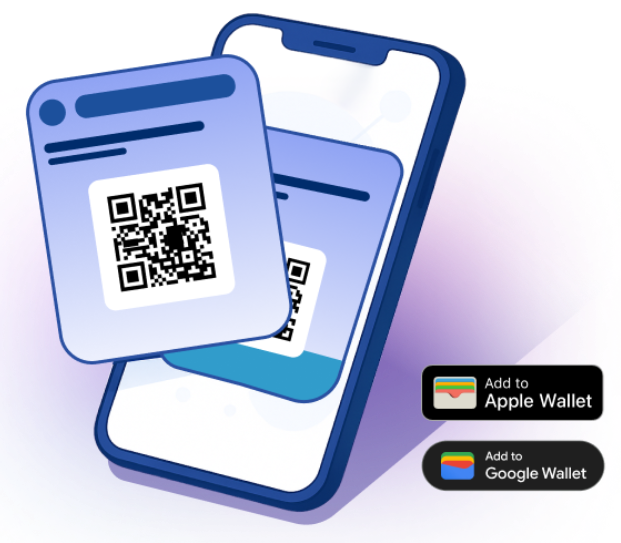
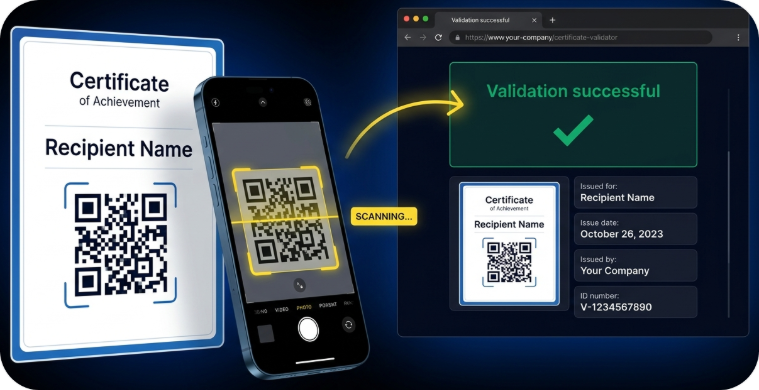
This is exactly where Virtualbadge.io comes in: Certificates and badges are cryptographically signed with ECDSA from the start, are based on the W3C VC 2.0 standard and work without blockchain. In addition, we are already in the EUDI Wallet sandbox and are building the issuance of credentials directly into the EUDI Wallet via OpenID4VCI. Credentials can also already be stored today as a Digital Wallet Card in Apple Wallet and Google Wallet, including a QR code for validation.
The first state EUDI Wallets are set to launch at the turn of the year, and the technical transition requires lead time. Organizations that rely on open standards, cryptographic signatures and wallet-ready formats now will not have to make improvements under time pressure later.
With Virtualbadge.io, certificates and badges can already be issued today in a way that meets these requirements, from the signature to the validation page. In a free demo, we show you what this looks like in practice: Book a demo
* You can find the organisation ID in the URL when you access your LinkedIn Company page as an admin.


Marketing

Oct 21, 2026

5 min
A note on how we write: we use AI tools to help with research and drafting. Every article is then reviewed, edited and fact-checked by someone on the Virtualbadge.io team before it goes live. The final word is always human.

Use Virtualbadge.io to design and send digital certificates that create trust - in less than 10 minutes.