
What should an issuer do when fake certificates appear?
Act in six steps. Secure evidence, confirm what is fake, revoke affected credentials and warn verifiers on your website. Report fake sites to hosts, registrars and Google Safe Browsing, and file a complaint with the FBI's IC3 where a crime is involved. Then keep checking whether the fakes come back1234.
Key points
- Secure evidence before anything else: the documents, screenshots, addresses and dates.
- Revoke affected credentials, so that every check shows the true status1.
- Report fake sites to the host, the registrar and Google Safe Browsing24.
- Where a crime is involved, anyone affected can file a complaint with the FBI's IC33.
Sooner or later, many issuers find fakes with their name: a forged certificate an employer sends in, an online offer or a copied verification page. The first days decide how much damage follows.
This playbook lists six steps with templates for verifiers, hosts and your website. It does not replace legal advice, so involve your counsel early.
Six steps at a glance
- Secure evidence: documents, screenshots, addresses and dates.
- Confirm: compare the fake with your records.
- Revoke: invalidate affected credentials1.
- Warn: tell verifiers on your website how to check.
- Report: to hosts, registrars and Google Safe Browsing2.
- Follow up: file a complaint where a crime is involved, and keep searching34.
Steps 1 and 2: secure evidence and confirm
Save what you have before it disappears: the fake document, screenshots of web pages with the full address and the date, email headers and any payment details. Note who sent what and when.
Then compare the fake with your records. Is the person in your database? Do the details match? Is there a real certificate behind it that was altered? The answers decide the next steps.
Step 3: revoke what is affected
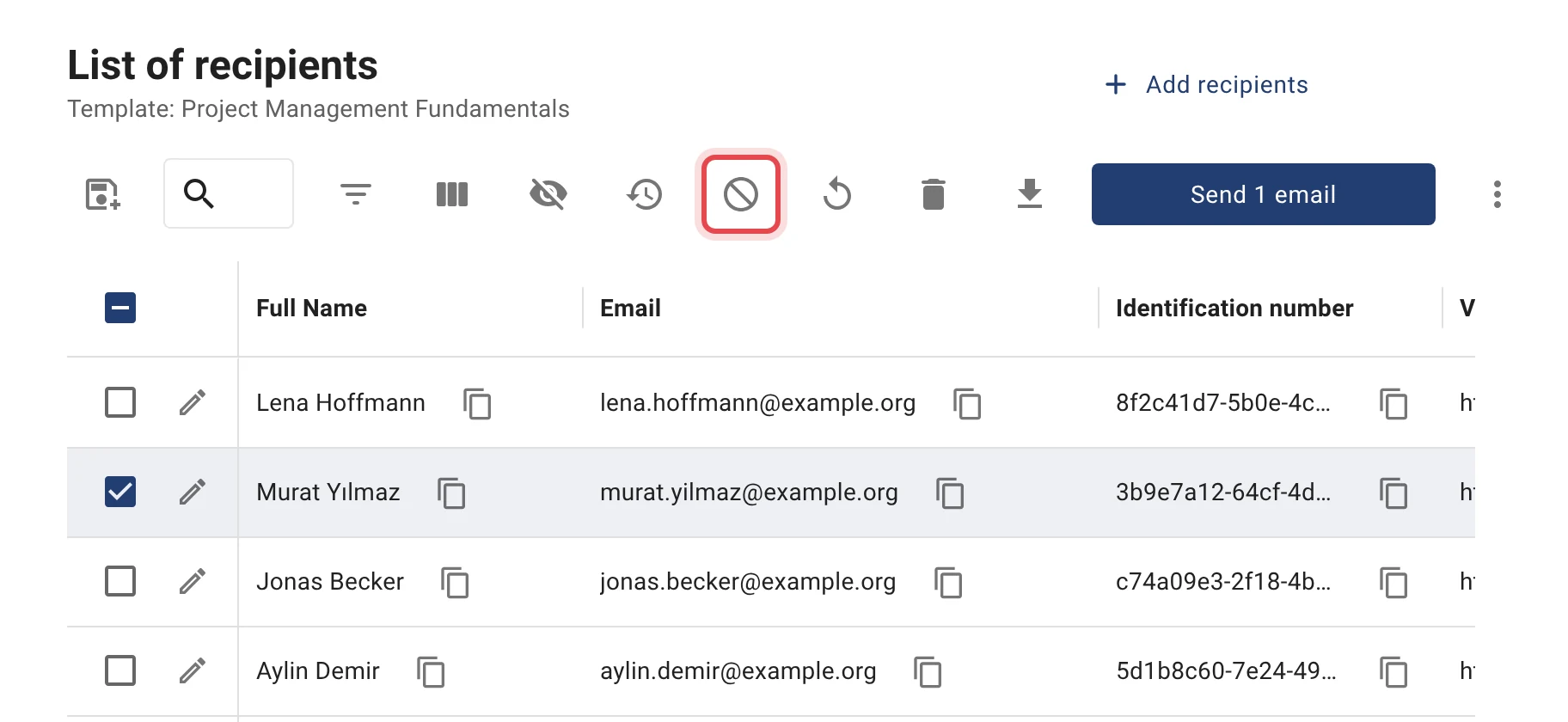
If a real credential was misused or issued in error, revoke it. In Virtualbadge.io, a revocation makes the credential invalid while the record is kept. The validation page shows the new status immediately, including for older copies1.
Step 4: warn verifiers
Publish a short notice on your website that explains how to verify your certificates and names the one official address. Employers who check a suspicious certificate will find it.
How to verify our certificates

We confirm certificates only through our official verification page at [address]. We have seen fake certificates and websites that use our name. If a certificate cannot be found there, or if you reached a verification page through another address, please contact us at [email] with the certificate number. We answer within [time].
Step 5: report fake sites
Report fake verification pages and lookalike domains to the hosting provider and the domain registrar. Report phishing pages to Google Safe Browsing, which offers a form for this2.
Subject: Fraudulent website impersonating [organization]

The website at [address] impersonates [organization] and confirms forged certificates in our name. We are the issuer of these certificates. Our official verification page is at [address]. Attached are screenshots with date and time and a comparison with our real page. Please disable the website.

Contact: [name, role, email, phone]
AI Fraud Protect prepares an evidence package for each case and sends reports to the hosting provider, the registrar, the DNS provider and Google Safe Browsing. Every message is reviewed and sent by a person. Legal steps such as cease-and-desist letters stay with your counsel4.
Step 6: file a complaint and keep watching
Where a crime is involved, file a complaint with the FBI's Internet Crime Complaint Center. IC3 is the FBI's central repository for cyber-enabled crime complaints, and anyone who believes they are affected may file3.
Then keep watching. Fakes often return under new addresses. A regular search for copies of your verification page and for lookalike domains shows whether they do4.
AI Fraud Protect Let us find and report fake verification pages for you.
This overview is not legal advice.
Frequently asked questions
What should we do if someone uses a fake certificate with our name?
Secure evidence, confirm against your records, revoke what is affected and warn verifiers. Report fake sites, and file a complaint with IC3 where a crime is involved13.
How do I report a fake verification website?
Report it to the hosting provider and the registrar of the domain, and to Google Safe Browsing through its report form2.
Where can certificate fraud be reported to the FBI?
Through the Internet Crime Complaint Center (IC3), which collects complaints about cyber-enabled crime3.
Should we tell the public about fake certificates?
A short notice on your website with the official verification route helps verifiers. Check the wording with your counsel.
As of Nov 18, 2026. We check the facts regularly. Is something out of date? Tell us, and we will fix it.
Sources
- Virtualbadge.io, how-to guides: Revoke or replace a certificate accessed November 18, 2026
- Google: Report a phishing page to Google Safe Browsing accessed November 18, 2026
- Federal Bureau of Investigation: Internet Crime Complaint Center (IC3): frequently asked questions accessed November 18, 2026
- AI Fraud Protect (FutureNext GmbH): AI Fraud Protect: copies of your website, fake verification pages and phishing in your name accessed November 18, 2026
Note: This article is for general information only and is not legal advice.