
What is a fake verification website?
A website that copies or imitates an issuer's verification page and confirms forged certificates as valid. Verifiers reach it through the QR code, link or phone number on the fake. Issuers counter it with one official verification address on their own website, a page that explains how to verify, and a regular search for copies and lookalike domains123.
Key points
- A fake verification site confirms a forged certificate as valid, so the forgery passes the check1.
- Some diploma mills run a verification service that sends phony transcripts to employers who call2.
- Lookalike domains use typos, similar characters or extra words. AI Fraud Protect checks up to 20,000 variants of a domain1.
- Issuers protect verifiers with one official verification address on their own website and a regular search for copies13.
Most forgeries fail at the moment someone checks them. That is why forgers fake the check as well. A copied verification page on a lookalike domain confirms whatever the forger printed.
This article explains how these sites work, how verifiers spot them and what issuers can do. It applies to colleges, certification bodies, exam providers and anyone whose name confirms something.
How a fake verification site works
- The forger creates a certificate with your name and logo.
- The certificate carries a QR code, link or phone number that leads to the forger's site or line.
- The site looks like your verification page, on a domain that resembles yours1.
- It confirms the fake as valid, and the verifier stops checking.
The pattern is old. The FTC has long warned that some diploma mills offer a verification service that sends a phony transcript to a prospective employer who calls2. In the Axact case, prosecutors described websites for fake schools that kept collecting enrollment fees4.
Lookalike domains
Fake verification pages live on domains that look like the real one: a typo, a similar character, an extra word such as verify or check, or a different ending. AI Fraud Protect checks up to 20,000 variants of an organization's domains, with typos, homoglyphs and add-ons1.
| Pattern | Example for example-academy.com |
|---|---|
| Typo | exmaple-academy.com |
| Similar character | examp1e-academy.com |
| Extra word | example-academy-verify.com |
| Different ending | example-academy.net |
Illustrative examples only.
How verifiers spot a fake check
- Domain: Does it match the issuer's main website exactly? If in doubt, open the main website yourself and go from there.
- Route: Did you arrive through a code, link or number on the document? Then confirm through a route you found yourself.
- Signature: A fake page can say valid, but the PDF signature still fails without the issuer's key5.
- Contact: Call or email the issuer using contact details from its official website.
What issuers can do
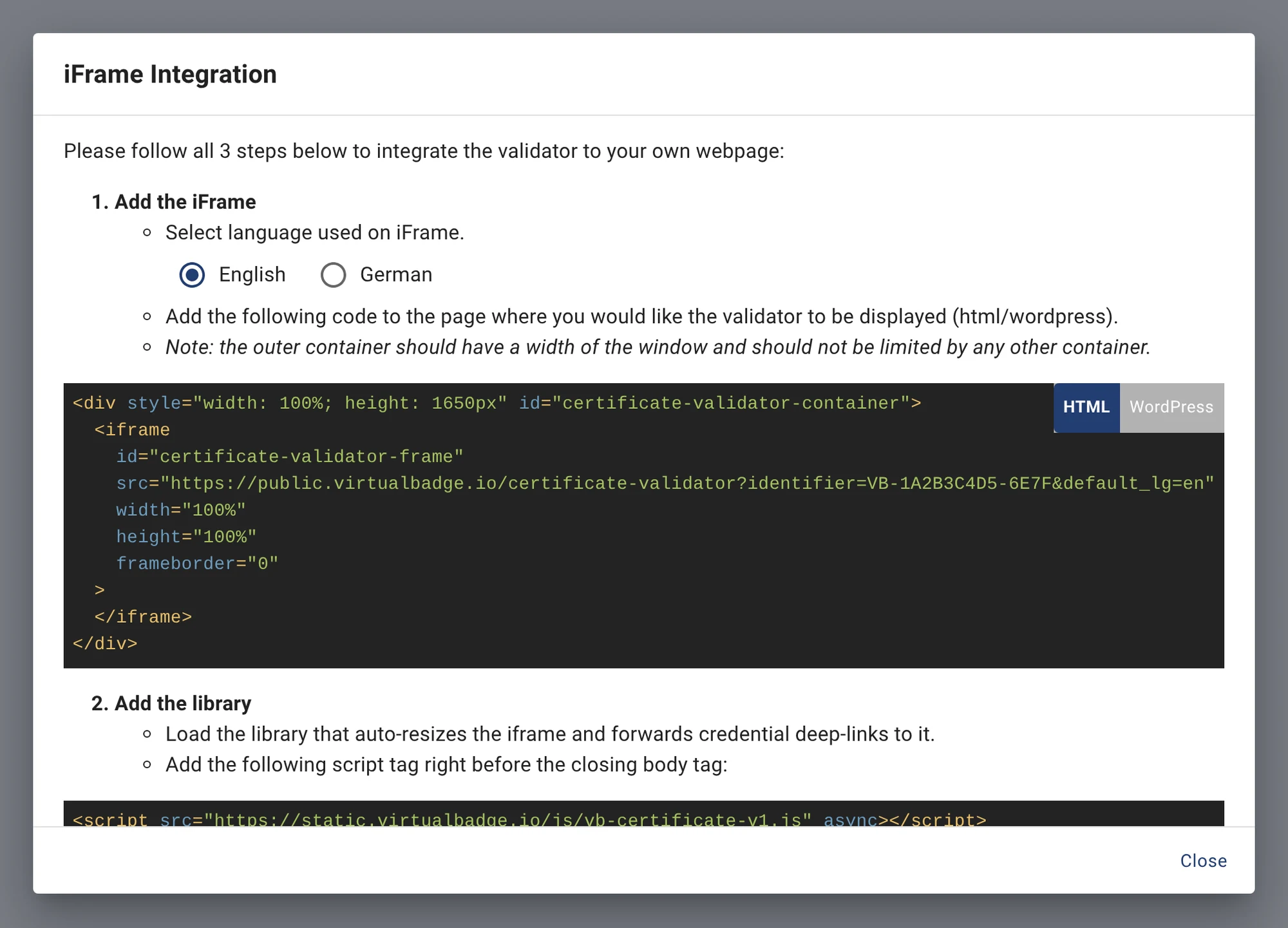
- Run verification on your own website, so that links and QR codes of new credentials lead to your domain3.
- Publish one page that explains how to verify your certificates, with the official address.
- Seal your PDFs, so that a fake page cannot make an altered document pass the signature check5.
- Search regularly for copied pages and lookalike domains, and report what you find1.
When you find a copy
Secure evidence first: screenshots, the address, the date and the contact details on the page. Then report the site to the host, the registrar and Google Safe Browsing6, and warn verifiers on your website. The full playbook with templates is in the fraud response plan.
AI Fraud Protect builds an evidence package for each case and sends reports to the hosting provider, the registrar, the DNS provider and Google Safe Browsing. Every message is reviewed and sent by a person1.
AI Fraud Protect Find copies of your verification page before verifiers do.
Frequently asked questions
How do I know if a verification website is real?
Open the issuer's main website yourself and follow its link to verification. If that address differs from the one you came from, trust the one you found yourself.
Can a fake website confirm a fake certificate?
Yes. That is the purpose of a fake verification site. Some diploma mills even run verification services by phone2.
What is a lookalike domain?
A domain that resembles the real one through typos, similar characters, added words or a different ending1.
How can an issuer find fake verification pages?
By searching regularly for copies of its pages and for domains that resemble its own, for example with a monitoring service such as AI Fraud Protect1.
As of Nov 18, 2026. We check the facts regularly. Is something out of date? Tell us, and we will fix it.
Sources
- AI Fraud Protect (FutureNext GmbH): AI Fraud Protect: copies of your website, fake verification pages and phishing in your name accessed November 18, 2026
- Federal Trade Commission: Avoid fake-degree burns by researching academic credentials (guidance for business) accessed November 18, 2026
- Virtualbadge.io, how-to guides: Embed the validation page in your own website accessed November 18, 2026
- U.S. Attorney's Office, Southern District of New York: Pakistani man sentenced to 21 months in prison for Axact diploma mill scam, August 28, 2017 accessed November 18, 2026
- Virtualbadge.io, how-to guides: Digitally seal PDF certificates and verify the signature accessed November 18, 2026
- Google: Report a phishing page to Google Safe Browsing accessed November 18, 2026
Note: This article is for general information only and is not legal advice.