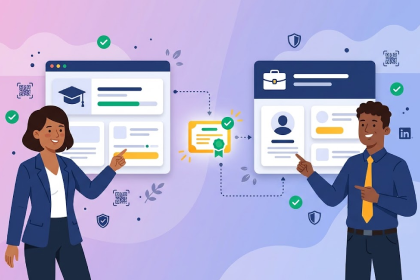
No user accounts required for your recipients -
Start your 7-day free trial now!

Digital credentials help bootcamps and tech training providers stand out, support their graduates, and build lasting credibility in a competitive hiring market.


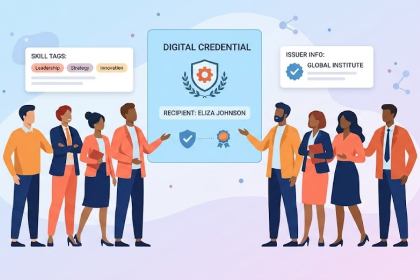
The tech industry moves fast, and so does hiring. When a candidate applies for a developer role or a cybersecurity position, recruiters often have little time to review their profile. A PDF certificate attached to an email, or a line on a resume that says "Completed Full-Stack Bootcamp," does very little to move the needle.
The core problem is verification. Employers have no reliable way to confirm that a PDF certificate is authentic, that the course actually covers what it claims, or that the graduate completed it recently. In a field where skills go out of date quickly and credential fraud is a real concern, this uncertainty creates friction. Hiring managers either skip unverifiable credentials or spend time chasing confirmation, which most simply do not have.
For bootcamps and tech training programs, this is a missed opportunity. Your graduates put in real effort. Your curriculum is current. But if your certificates cannot be trusted immediately, the value you provide does not fully carry through to the job market.
Digital badges solve the verification problem directly. Each badge contains embedded metadata that records exactly what was completed, when it was issued, who issued it, and what competencies it represents. Anyone can click on a badge and see this information instantly, without contacting your organization or making a judgment call.
This matters for tech training programs in particular, because the skills you teach are specific. A badge for "Python for Data Analysis" or "AWS Cloud Practitioner Prep" tells an employer far more than a generic certificate of completion. The credential is precise, and it is verifiable.
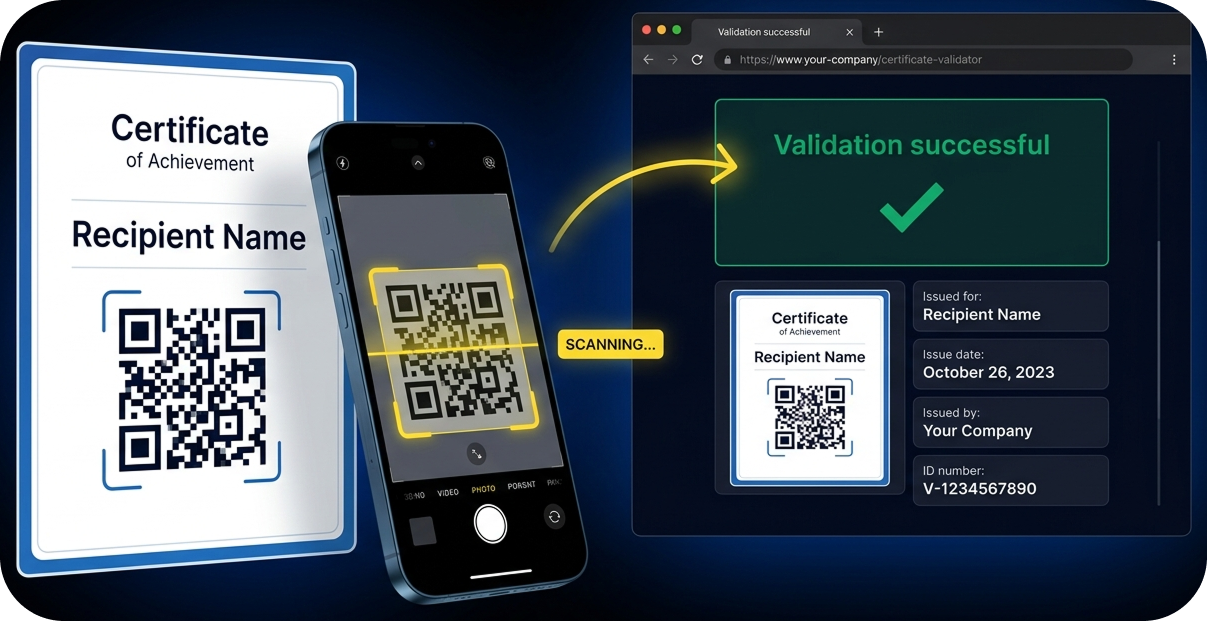
Beyond verification, digital badges do not expire in a drawer. They live online, travel with the recipient, and can be shared on any platform. Graduates can add them to their LinkedIn profile, include them in their portfolio, or attach them to a job application in seconds.
For more on how to set up verified digital badges for your training program, read: Digital Badges for Training: How to Create Verified Badges
LinkedIn has become the primary channel for tech recruiting. Recruiters search for candidates with specific skills, and a profile with verified credentials consistently outperforms one with plain text claims. When a graduate adds a digital badge directly to their LinkedIn "Licenses and Certifications" section, it becomes part of their searchable profile and links back to the issuing organization.
This is free, ongoing visibility for your program. Every time a graduate shares a badge, their network sees it. Every endorsement, comment, or reaction extends your reach to potential new students. For bootcamps operating in competitive markets, this kind of organic word-of-mouth is difficult to replicate through advertising alone.
The effect goes beyond LinkedIn. Graduates use badges in email signatures, personal portfolio websites, and Slack communities. In tech circles, where credentials and portfolio work carry real weight, a shareable and verifiable badge is a practical asset.
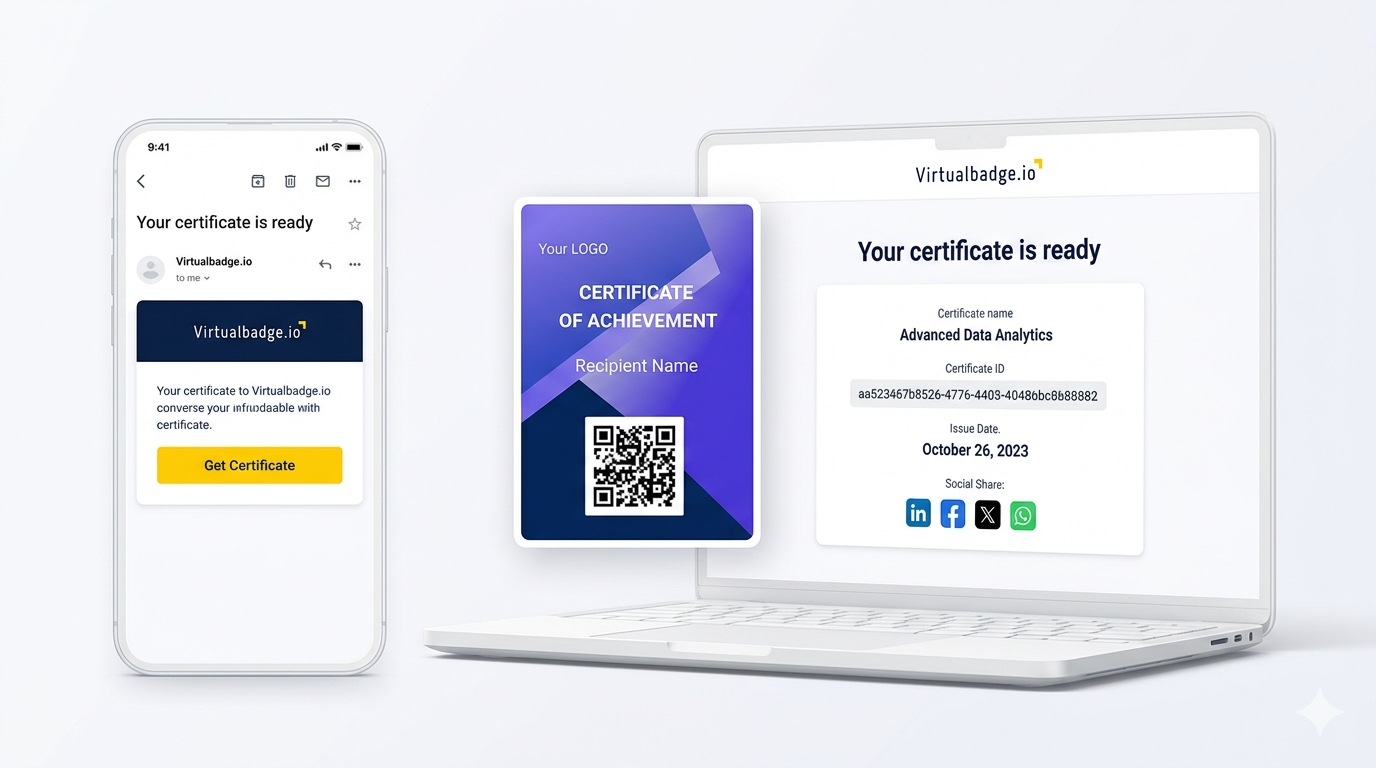
For a closer look at how LinkedIn badge sharing works in practice, read: Digital Badges for LinkedIn: How to Make Your Course Stand Out
Issuing digital badges is not just a service for your graduates. It is a signal about the quality and seriousness of your program. When employers repeatedly see verifiable badges from the same bootcamp, they begin to recognize that organization as a trustworthy source of skilled candidates. That reputation compounds over time.
Digital credentials also create a feedback loop. Most badge platforms provide data on how often badges are viewed, shared, and clicked. This engagement data helps you understand which credentials resonate most in the job market, giving you concrete insight into how your program is perceived externally.
Organizations that have made the switch to fully digital certificate issuance report not only time savings in administration, but also a measurable improvement in how their credentials are received. SIZ AG, a Swiss organization that certifies ICT user competencies and conducts over 110,000 exams per year through more than 90 partner schools across Switzerland, moved to fully automated digital certificate issuance and achieved seamless system integration
Read the full case study: How SIZ Fully Digitized Its Certificate Issuance Process
Implementing digital badges does not require a major technical overhaul. Platforms like Virtualbadge.io allow you to design branded badge templates, upload participant data via CSV or connect your existing LMS, and issue credentials automatically at scale.
The setup is straightforward, and the impact on your graduates, your brand, and your administrative workload becomes clear quickly. Whether you run a single intensive bootcamp or a portfolio of ongoing tech courses, digital badges are a practical upgrade that serves everyone in the process.
If you want to see how this works for a program like yours, book a free demo: Book a free demo
* You can find the organisation ID in the URL when you access your LinkedIn Company page as an admin.


May 13, 2026

4 min
A note on how we write: we use AI tools to help with research and drafting. Every article is then reviewed, edited and fact-checked by someone on the Virtualbadge.io team before it goes live. The final word is always human.

Use Virtualbadge.io to design and send digital certificates that create trust - in less than 10 minutes.
%20(1).svg)