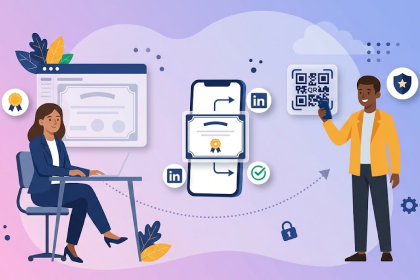
No user accounts required for your recipients -
Start your 7-day free trial now!

A comparison of the two integration approaches for digital certificates and badges, and how to make the right choice for your organization.


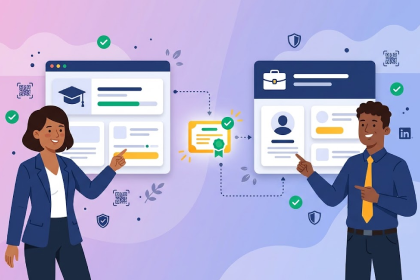
LMS integrations connect learning management systems directly with a credential platform. When a learner completes a course or passes an exam, a digital certificate or badge is automatically created and sent, via webhooks, API calls, or no code tools like Zapier.
This approach is aimed primarily at universities, continuing education institutes, and companies with external training programs. The recipients are students or course participants who frequently want to share their credentials publicly on LinkedIn.
Advantages at a glance:
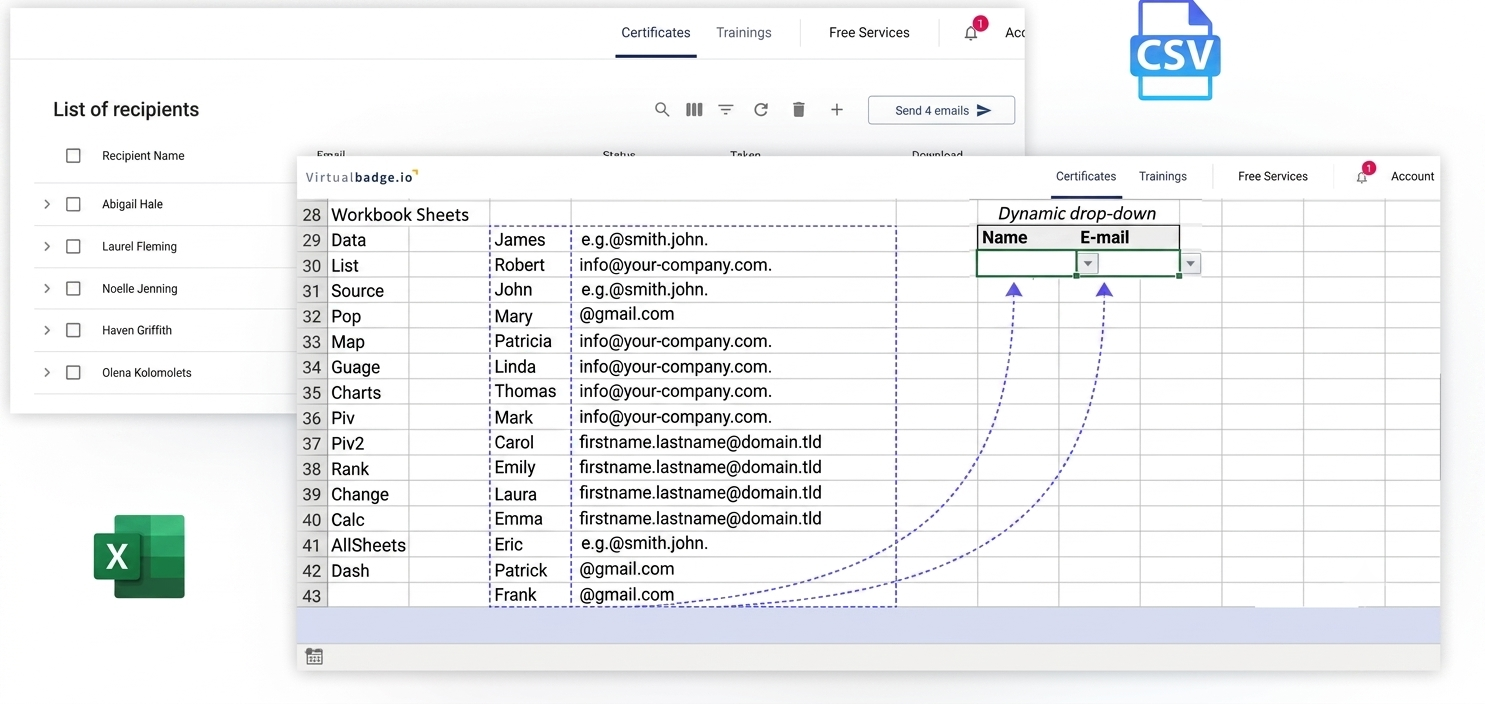
Configuration does, however, require a structured setup with clearly defined triggers for credential issuance. For multi step learning paths, this can take some time, and not every learning management system offers a native integration interface.
For more information, read: Open Badges 3.0: What Is the Status in 2026?
HR system integrations connect human resources management systems or corporate training tools with the credential platform. The focus is on internal records such as compliance training, safety certificates, or role specific qualifications.
Key advantages include:
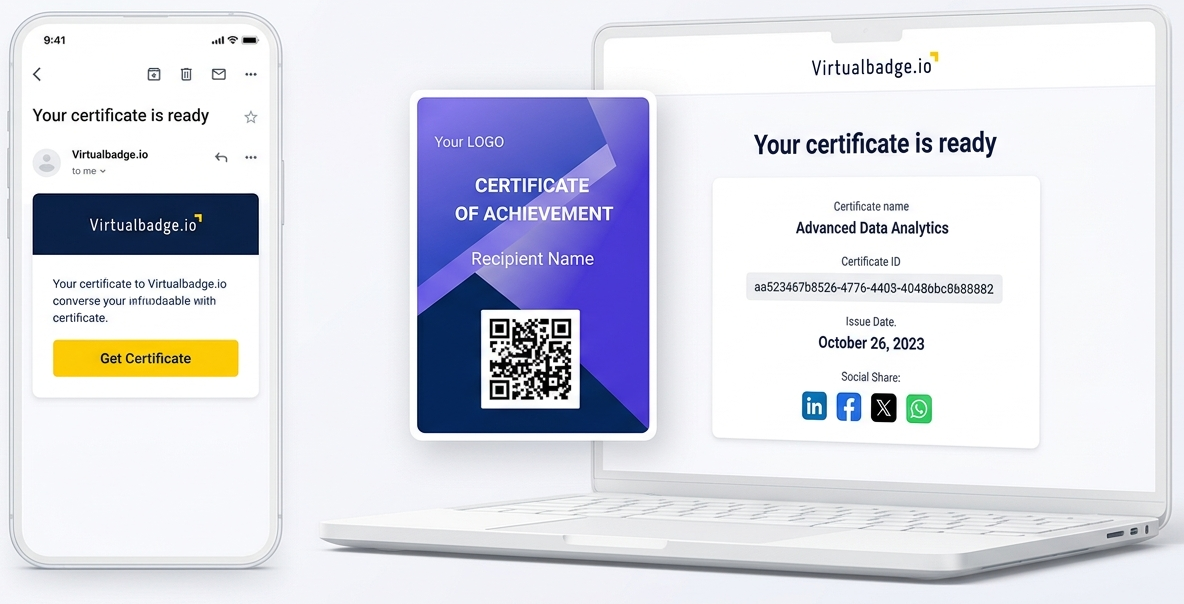
Logistics provider 4flow used exactly this approach to make internal skills visible and build a structured badge program for employees. You can find the details in the 4flow success story.
One limitation remains the lower external visibility. HR systems are less often designed for LinkedIn sharing, and integration usually requires coordination between IT, HR, and the relevant department.
The difference shows up primarily in three areas.
Both systems benefit from the same security mechanisms, a unique QR code and a validation page, through which employers or examiners can check the authenticity of a certificate at any time.
Educational institutions are often subject to strict data protection requirements, while HR systems process sensitive employee data. In both cases, the General Data Protection Regulation applies, which is why organizations should document what data is collected, how long it is stored, and who has access.
A European data hosting approach and cryptographically signed credentials meet key requirements in both integration scenarios.
The decision between LMS and HR integration is not an either or question. Many organizations need both approaches at the same time, for example a training institute that certifies external course participants through the LMS and internal trainers through the HR system.
Virtualbadge.io manages all credentials centrally regardless of the source system, with consistent templates and the same validation mechanisms. Both integration types can be connected via REST API and Zapier, without you having to commit in advance.
Schedule a free demo and find out how Virtualbadge.io fits into your existing learning and HR landscape.
Which system is suitable for universities?
For universities, an LMS integration is generally advisable, since students complete courses and should automatically receive their credentials, often in large volumes per semester.
When is an HR system integration more suitable?
When credentials should be part of the personnel file and expiration dates need to be tracked automatically, for example for compliance training or role specific certifications.
Can Virtualbadge.io serve both systems at the same time?
Yes. Virtualbadge.io connects via API or Zapier to both system types and manages all certificates centrally, with different templates for external and internal credentials.
What happens when employees leave the company?
Credentials issued with Virtualbadge.io remain verifiable even after leaving the company, regardless of the issuing system.
* You can find the organisation ID in the URL when you access your LinkedIn Company page as an admin.


Marketing

Sep 8, 2026

5 min
A note on how we write: we use AI tools to help with research and drafting. Every article is then reviewed, edited and fact-checked by someone on the Virtualbadge.io team before it goes live. The final word is always human.

Use Virtualbadge.io to design and send digital certificates that create trust - in less than 10 minutes.
%20(1).svg)