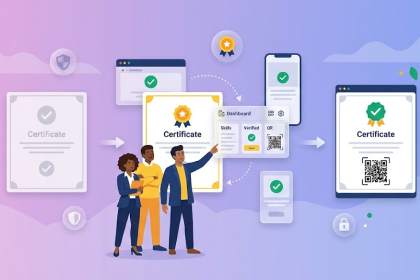
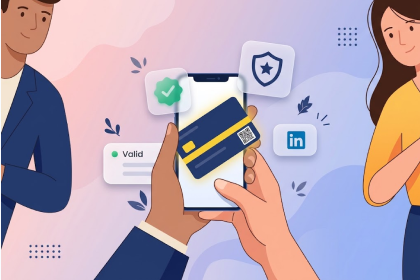
No user accounts required for your recipients -
Start your 7-day free trial now!

Digital badges guide potential learners from first contact to long-term engagement by creating value at each stage of the funnel, improving conversions and boosting loyalty for education providers.


Digital badges are verifiable digital credentials that recognize skills, achievements, or participation. Unlike static PDF certificates, they include metadata such as the issuer, criteria, and date of completion. This makes them easy to verify and easy to share, especially on platforms like LinkedIn.
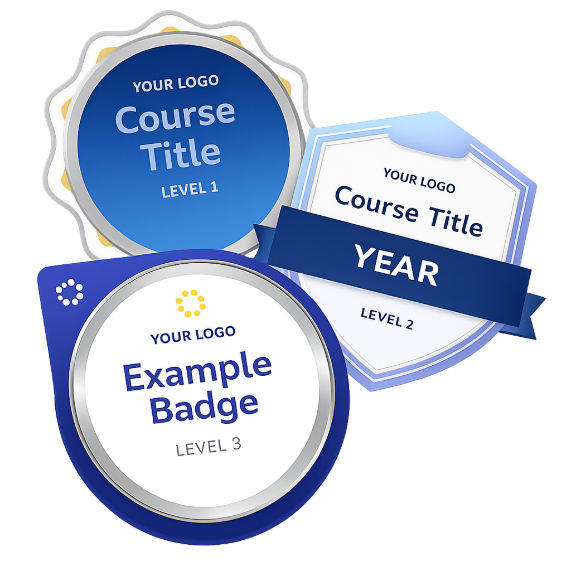
To understand their role in marketing, it helps to look at the sales funnel. In education and training, a typical funnel includes:
Many education providers focus heavily on the decision stage but struggle to move prospects from awareness to enrollment. This is where digital badges can create measurable business value.
When used strategically, badges are not just rewards after a course. They become structured touchpoints throughout the funnel. They give prospects a reason to engage early and learners a reason to stay connected later.
For a deeper understanding of how digital badges work and why they matter in modern credentialing, see: Digital Badges Explained
A lead magnet is something valuable you offer in exchange for contact information. In education, this is often a free webinar, a sample lesson, or a downloadable guide. However, many of these offers feel generic and are quickly forgotten.
A digital badge changes that dynamic because it creates recognition, not just information.
Imagine a first aid training center offering a free 45-minute online safety workshop. Instead of only sending a confirmation email afterward, participants receive a verifiable digital badge for completing the session. That badge can:
%201.png)
Now the free session becomes a visible achievement. The participant gains recognition, and your brand gains exposure.
To receive the digital badge, participants typically need to claim their credential through a dedicated badge page or email notification. During this step, they confirm their name and email address or create a credential profile. This process transforms anonymous webinar attendees into identifiable contacts. In other words, the badge claim process itself becomes the lead capture mechanism.
Universities can apply the same approach with introductory lectures or open online events. A micro-credential for completing a pre course module or orientation session increases perceived value and encourages further engagement.
By integrating digital badges at the top of the funnel, education providers turn passive website visitors into identifiable leads who already associate your brand with achievement and credibility.
Once a prospect has interacted with your organization, the real challenge begins. Many education providers see strong interest at the top of the funnel, but experience drop offs before enrollment. Digital badges can reduce this friction by rewarding meaningful steps before the final purchase decision.
Consider a university offering a paid certification program in project management. Instead of asking prospects to enroll immediately, the university could provide:
Each of these touchpoints can be connected to a digital badge. When a prospect completes the preparatory module and receives a badge, two important things happen. First, the learner invests time and effort, which increases psychological commitment. Second, the badge becomes visible proof of engagement.
For first aid training centers, this might look like a pre course online safety basics module. Participants who complete it receive a digital badge that signals readiness for the full certification. The badge can include a clear call to action such as “Continue to full First Aid Certification.”
By structuring your funnel this way, you create micro conversions that gradually move prospects toward enrollment. Instead of a single yes or no decision, you guide them through a series of smaller, rewarded steps. This approach increases trust and reduces hesitation without relying on aggressive sales tactics.
The final stage of the funnel is not the sale. It is loyalty. For education providers, loyalty means repeat enrollments, corporate partnerships, and referrals from satisfied learners. Digital badges can support this stage in a practical and measurable way.
After completing a course, learners typically receive a certificate. When that certificate is digital and verifiable, it becomes a long-term branding asset. Every time a learner shares their badge on LinkedIn, your organization gains exposure within professional networks.
For example, a medical continuing education provider issuing digital certificates for CPD courses can ensure that every credential includes:
This transforms each graduate into a visible ambassador for your institution. Colleagues who see the credential can immediately verify it and explore your offerings.
Loyalty also grows when badges are part of a structured pathway. Instead of issuing isolated credentials, you can design progressive levels such as Foundation, Advanced, and Instructor certifications. Learners are more likely to return when they see a clear development path and when their achievements are permanently documented and easy to share.
By aligning digital badges with long-term engagement goals, education providers transform single course participants into repeat customers and credible advocates within their professional communities.
To treat digital badges as a serious part of your sales funnel, you need to measure their impact. Many education providers issue certificates without tracking what happens afterward. A structured badge strategy allows you to connect credentials with marketing and enrollment data.
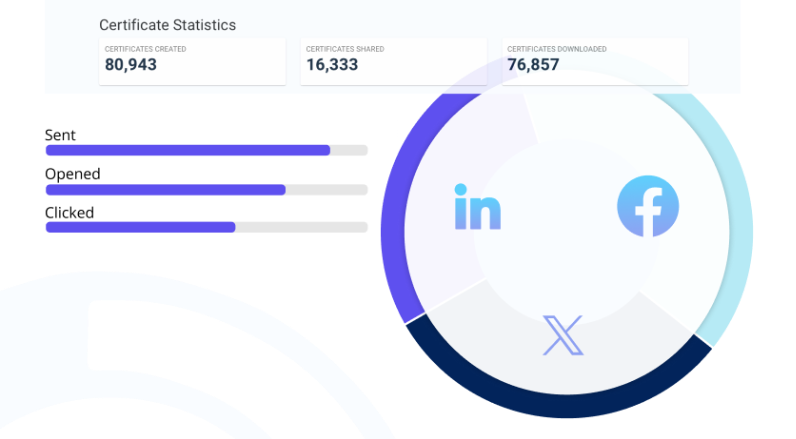
Start by defining what success looks like at each stage of the funnel.
At the top of the funnel, relevant metrics may include:
In the middle of the funnel, you can track:
At the loyalty stage, important indicators include:
Because digital badges are verifiable and trackable, they create data points that static PDFs simply cannot provide. When connected with your CRM or marketing automation system, they become measurable conversion assets rather than decorative add-ons.
Digital badges are more than digital certificates. When integrated into your sales funnel, they become structured conversion tools that guide prospects from first interaction to long-term loyalty.
For education providers such as first aid training centers and universities, this approach connects marketing and credentialing in a practical way. Instead of treating certificates as an administrative afterthought, you position them as measurable growth drivers.
Explore how Virtualbadge.io can help you design, issue, and track digital badges across your entire learner journey.
Book a free demo and discover how to move from lead magnet to long term loyalty with a scalable credentialing strategy.
* You can find the organisation ID in the URL when you access your LinkedIn Company page as an admin.


Marketing

Mar 16, 2026

6 min
A note on how we write: we use AI tools to help with research and drafting. Every article is then reviewed, edited and fact-checked by someone on the Virtualbadge.io team before it goes live. The final word is always human.

Use Virtualbadge.io to design and send digital certificates that create trust - in less than 10 minutes.
%20(1).svg)