No user accounts required for your recipients -
Start your 7-day free trial now!

How education providers can recognize skills, increase learner mobility, and modernize certification for flexible learning paths


A growing number of learners engage in training alongside work, family responsibilities, or voluntary activities. These non-traditional learners include working professionals, adult learners, and participants in short term, modular, or online programs.
This shift is visible across many education settings. First aid organizations train participants who need fast, reliable certification and regular renewals. Universities offer continuing education and certificate programs in addition to degree courses. Training providers deliver skills based and compliance focused education that does not follow academic timelines.
What unites these learners is a strong focus on outcomes. They invest in education to achieve concrete goals such as compliance, career development, or professional recognition. As a result, they expect learning outcomes to be documented clearly and in a way that works beyond the issuing organization.
Education providers face new requirements:
Traditional credential models struggle to meet these expectations. Many learners complete relevant training, yet the proof they receive does not reflect the importance or usability of their achievements.
Paper certificates and PDF documents were not designed for today’s digital education landscape. They work as static records, but they fail to support verification, visibility, and flexibility.
Verification is often manual and time consuming. Employers or institutions must contact the issuer to confirm authenticity or validity, which rarely happens in practice. This reduces trust in certificates, especially for short or non-degree programs.
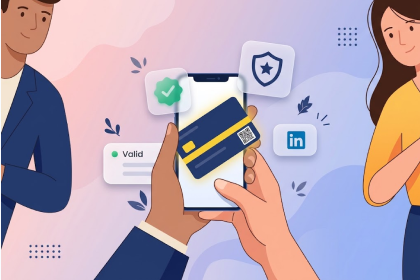
Visibility is another challenge. Non-traditional learners increasingly present their qualifications online, but traditional certificates are poorly suited for digital sharing. As a result, learning outcomes remain disconnected from professional platforms.
Traditional certificates also fail to represent modular learning effectively. Skills, competencies, and recurring training are difficult to document in a meaningful way when reduced to static files.
Common limitations include:
As education becomes more flexible and continuous, traditional certificates no longer reflect how learning happens or how it is evaluated. This creates a growing gap between education delivery and recognition that education providers need to address.
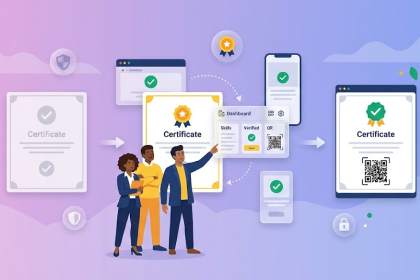
Digital credentials are designed to reflect how learning happens today. They translate education outcomes into verifiable, portable records that work across institutions, platforms, and career stages. For non-traditional learners, this closes the gap between completing a course and being recognized for it.
Verification is built in, usually through a validation page that can be accessed online. This approach creates clear value for learners and education providers.
For learners, digital credentials:
Short courses, refresher trainings, or skills based programs can be documented precisely instead of being reduced to generic certificates. This is especially relevant for programs that focus on practical competencies rather than academic credits.
Digital credentials also align with modern hiring and compliance processes. Verifiable credentials reduce uncertainty and lower the effort required to validate training, particularly in regulated or safety critical fields.
For deeper research, read: How Certificates Improve Trust on Social Media
Digital credentials are already used across a wide range of education and training scenarios. Their flexibility makes them suitable for both formal and non formal learning environments.
Universities and higher education institutions use digital credentials for continuing education and certificate programs. Short programs, online courses, and executive education can be documented independently from degree transcripts while maintaining institutional branding and credibility.
Training organizations benefit from digital credentials in skills-based and modular programs.

Individual competencies can be recognized separately and later combined into larger qualifications. This supports lifelong learning models and makes progress visible even when learners complete training over longer periods.
Typical use cases include:
From an operational perspective, digital credentials also reduce administrative workload. Issuing, reissuing, and verifying certificates can be automated, which is particularly valuable for providers with high participant volumes.
For deeper research, read the success story on Virtualbadge.io: How OMR Education Transformed Its Certificate Issuance
A future ready strategy focuses on clarity, consistency, and scalability rather than one off certificate issuance.
The first step is defining which learning outcomes should be recognized. This can include course completion, individual skills, compliance training, or recurring certifications. Clear criteria make credentials easier to understand and more credible for employers and institutions.
Consistency across programs is equally important. Digital credentials should follow a common structure and visual identity so learners can easily recognize and combine them over time. This strengthens trust in the issuing organization and improves recognition beyond a single course.
Operational fit is critical. Credential issuance should integrate into existing systems and workflows to avoid manual effort and errors, especially for providers issuing certificates at scale.
Key considerations include:
Digital credentials help education providers document learning in a way that supports learner mobility and long-term value. They connect flexible education models with clear recognition in professional contexts.
If you want to see how digital certificates and badges can support your programs, you can schedule a free demo with Virtualbadge.io and explore how digital credentialing works in practice.
* You can find the organisation ID in the URL when you access your LinkedIn Company page as an admin.


Marketing

Feb 23, 2026

5 min
A note on how we write: we use AI tools to help with research and drafting. Every article is then reviewed, edited and fact-checked by someone on the Virtualbadge.io team before it goes live. The final word is always human.

Use Virtualbadge.io to design and send digital certificates that create trust - in less than 10 minutes.
%20(1).svg)