No user accounts required for your recipients -
Start your 7-day free trial now!

Why many universities still rely on paper certificates despite the eIDAS Regulation and BSI recommendations, and how legal, technical, and organizational hurdles can be overcome in practice.



University certificates are legally classified as official documents, which is why many administrations remain cautious about the electronic format. Yet the eIDAS Regulation has long established a unified European framework for electronic signatures and seals. Qualified electronic signatures are legally equivalent to a handwritten signature.
The German Federal Office for Information Security (BSI) has already published concrete technical recommendations with its guidance "Digital Certificates". Among other things, it describes:
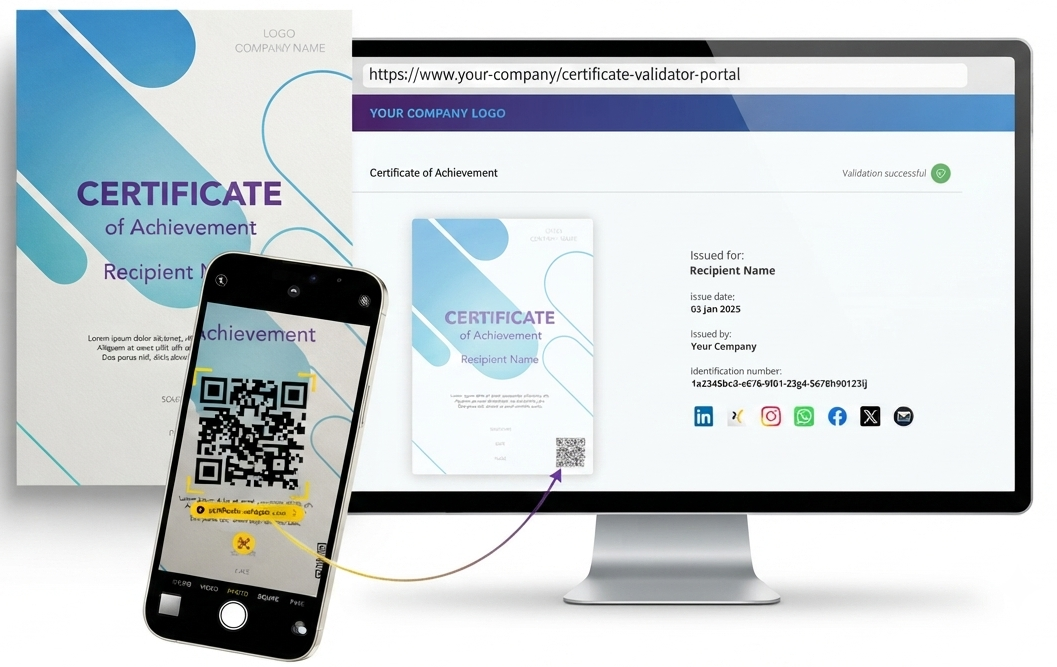
Despite this foundation, it remains unclear for many universities which form is permitted for which type of credential. This uncertainty, not a missing legal framework, is the real limiting factor.
For more information, read: eIDAS 2.0: What is coming for organizations in Europe
Faculties, institutes, and examination offices at many universities operate with their own responsibilities and processes. Who decides on the certificate format, and who manages the keys for electronic seals? In federal systems, state specific regulations add further complexity, so solutions cannot simply be transferred from one university to another.
At the same time, manually issuing paper certificates ties up considerable resources: printing, signing, mailing, archiving, and processing requests for replacements. Virtualbadge.io's Organization Hub addresses this decentralization with a multi tenant solution. Each faculty designs its own certificate templates, while a central administration retains governance over design and issuance guidelines.
The Portuguese Lisbon Digital School has already taken a similar approach and fully digitized its certificate issuance, as described in the Lisbon Digital School case study.
The best starting point is rarely a complete overhaul all at once, but rather a manageable pilot project, such as a single certificate program or a continuing education module. This allows universities to gain experience without immediately changing existing processes. Useful steps for this include:
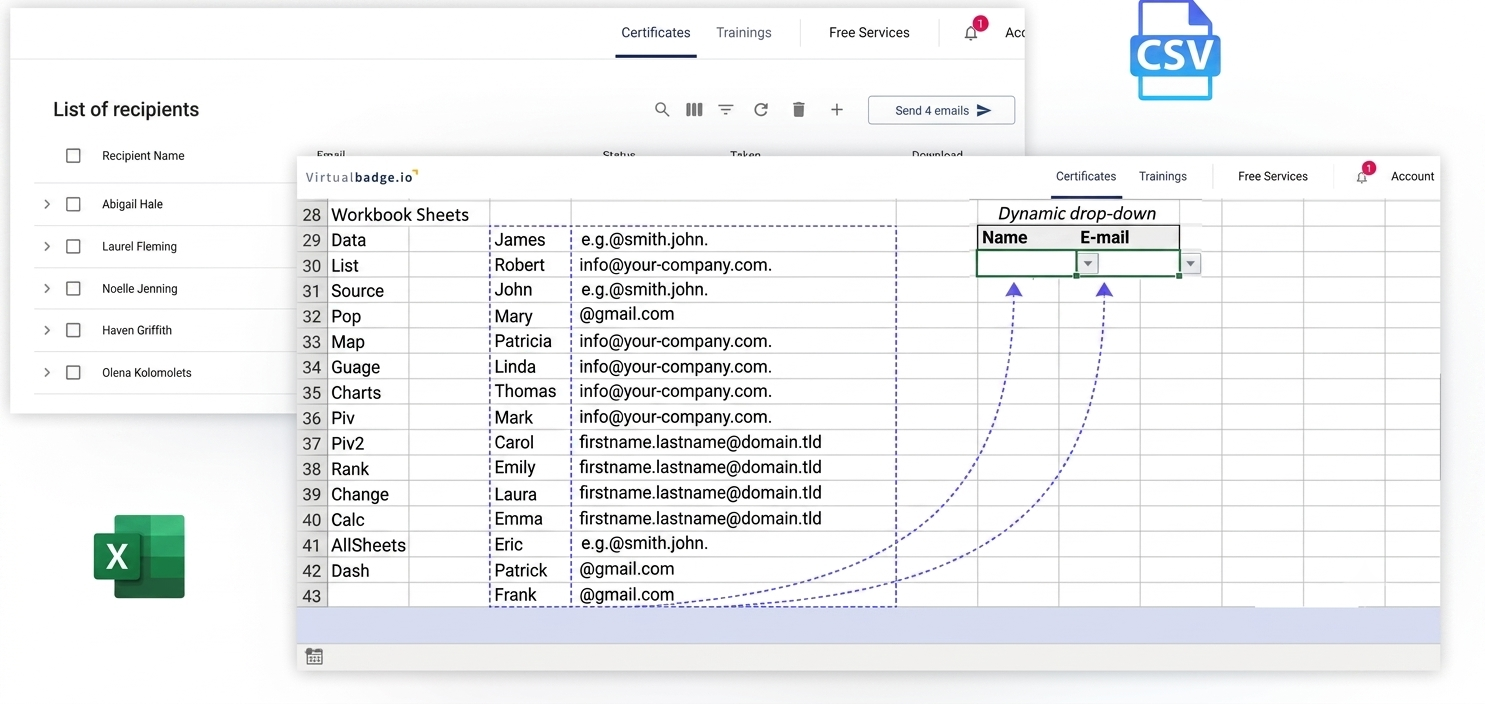
Virtualbadge.io supports this process with a free initial consultation, during which exam volume, existing systems, and regulatory requirements are analyzed together.
Legal uncertainties, missing standards, and decentralized structures are real hurdles, but not permanent ones. Universities that start now with a pilot project are a decisive step ahead of the standard.
Virtualbadge.io makes getting started easy with cryptographically signed certificates, automated issuance, and multi tenant management for faculties and institutes. Schedule a free demo now
What are the biggest obstacles to adopting digital university certificates?
Legal uncertainty regarding the electronic form of official documents, a lack of unified standards, and the decentralized structure of many universities with independent faculties and examination offices.
How long does it take to implement a digital certificate system?
With a platform like Virtualbadge.io, a pilot project can be launched within a few days. Full integration into existing administrative systems depends on individual effort.
What advantages do digital certificates offer students?
Students receive their credential immediately upon completion, can share it on LinkedIn with a single click, and employers can verify its authenticity directly through a verification link.
* You can find the organisation ID in the URL when you access your LinkedIn Company page as an admin.


Marketing

Aug 18, 2026

4 min
A note on how we write: we use AI tools to help with research and drafting. Every article is then reviewed, edited and fact-checked by someone on the Virtualbadge.io team before it goes live. The final word is always human.

Use Virtualbadge.io to design and send digital certificates that create trust - in less than 10 minutes.
%20(1).svg)