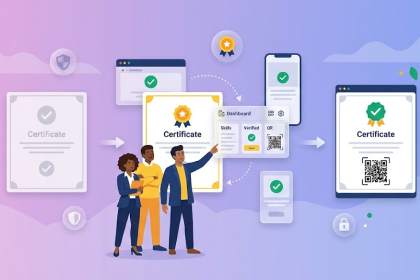
No user accounts required for your recipients -
Start your 7-day free trial now!

How Digital Badges Translate Skills, Trust, and Real-World Competence for Modern Hiring Decisions


Recruiters often review many applications under tight deadlines. Traditional documents such as paper certificates or static PDF files rarely deliver the clear, structured information they need. A certificate that simply states course completion does not explain what the learner can actually do. This lack of clarity slows down hiring decisions and creates ambiguity.
Traditional credentials also lack standard terminology. A course called “Advanced Skills Training” might include very different competencies depending on the provider. Recruiters do not have the time to interpret every credential individually, especially when similar titles mask different content.
Common recruiter challenges with traditional credentials include:
These structural limitations affect the recruiter's ability to make quick, confident decisions. This is where digital credentials, built to be data-rich and verifiable, change the game. As explained in the article: How to Create Digital Badges for Online Courses, digital badges contain embedded information that helps translate learning into meaningful, recruiter-friendly signals.
Recruiters look for trustworthy, structured signals that reduce ambiguity and speed up screening. Digital badges do this by embedding metadata that answers key questions immediately. Instead of a static certificate that needs interpretation, a badge contains clear, verifiable details.
Useful elements in a recruiter-friendly digital badge include:
These elements help recruiters understand not only what credential the candidate has, but also how it was earned and how it relates to job requirements. Recruiters are increasingly focused on competencies, not the length of a course or the prestige of a program. They need data, not ambiguity.
As highlighted in the article: Do Employers Trust Digital Badges and How to Make Credentials Count, badges that are verifiable and transparent build trust with employers and recruiters alike.
Digital badges become powerful tools in the hiring process when they:
Recruiters think in terms of skills, responsibilities, and outcomes. Educational providers often think in terms of courses, programs, and learning hours. Digital badges work best when they bridge this gap and translate educational achievements into a language recruiters immediately understand.
A badge should not just represent participation. It should represent capability. This means shifting the focus from course names to competencies and from duration to outcomes.
Recruiter-friendly badges use clear, concrete language that answers practical questions:
Instead of abstract or internal course titles, effective badges describe real-world abilities. For example, a badge that communicates Emergency Response Skills Level 2 is far more meaningful to a recruiter than a badge that simply references a training module name.
Badges that speak the recruiter’s language typically include:
When badges are structured this way, recruiters no longer need to interpret or guess. They can immediately map a badge to a role requirement or a competency framework. This makes digital badges powerful tools in skills-based hiring models, where demonstrable ability matters more than formal credentials alone.
Trust is a central factor in recruitment. Recruiters must be confident that a credential is authentic, current, and meaningful. At the same time, they need to move quickly. Digital badges address both needs by combining verification with accessibility.
This creates several advantages in the hiring process:
Speed matters not only for recruiters, but also for candidates. When credentials are easy to verify and understand, qualified candidates are less likely to be overlooked due to unclear documentation.
Verifiable badges also support international and cross-sector hiring. Recruiters can evaluate credentials consistently, regardless of where the badge was issued. This is especially important in global education, healthcare, and professional training environments.
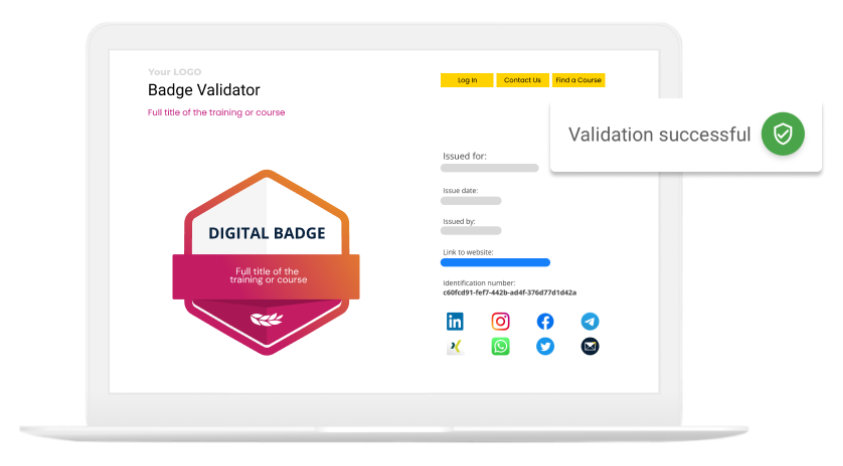
In practice, verifiable badges turn credentials into active proof points.
Digital badges only create impact when they are designed intentionally. A badge that looks good but lacks clarity or structure will still be ignored. To make badges valuable in recruitment, educational providers must think from the recruiter’s perspective.
Key principles for recruiter-friendly badge design include:
Consistency also plays an important role. When an organization issues multiple badges, they should follow a unified structure and terminology.
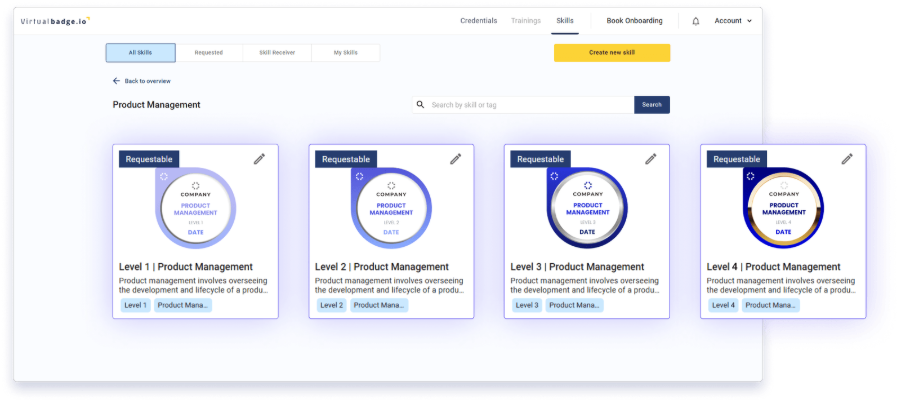
This makes it easier for recruiters to recognize patterns and understand progression across different levels or programs.
Common mistakes to avoid include:
Well-designed digital badges act as a shared language between education and employment. They help recruiters see not just that learning happened, but that relevant skills were proven.
If you want to issue digital certificates and badges that support skills-based hiring and are easy for recruiters to verify, see how Virtualbadge.io can help.
Ask all your questions and schedule a free demo where you can talk to our team and learn how to create recruiter-ready digital badges.
* You can find the organisation ID in the URL when you access your LinkedIn Company page as an admin.


Marketing

Feb 23, 2026

6 min
A note on how we write: we use AI tools to help with research and drafting. Every article is then reviewed, edited and fact-checked by someone on the Virtualbadge.io team before it goes live. The final word is always human.

Use Virtualbadge.io to design and send digital certificates that create trust - in less than 10 minutes.
%20(1).svg)