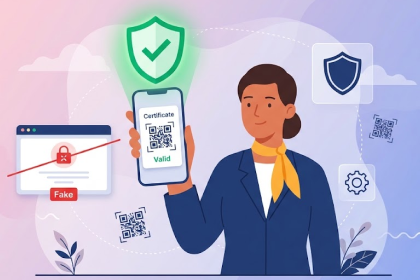
No user accounts required for your recipients -
Start your 7-day free trial now!

Why verifiable digital certificates noticeably reduce the administrative workload in examination offices.


Examination offices at German universities face a dilemma. Rising student numbers are colliding with paper based processes that can barely keep up. Every semester, thousands of degree certificates have to be printed, signed, and mailed, on top of requests for certified copies and the manual verification of submitted documents. Digital degree certificates offer a way out of this administrative overload.
Digital degree certificates are electronic documents that record qualifications in a standardized, machine readable format. Unlike a scanned PDF, they contain embedded metadata and a cryptographic signature that confirms their authenticity.
The European Commission has created a Europe wide standard with European Digital Credentials for Learning. It covers, among other things:
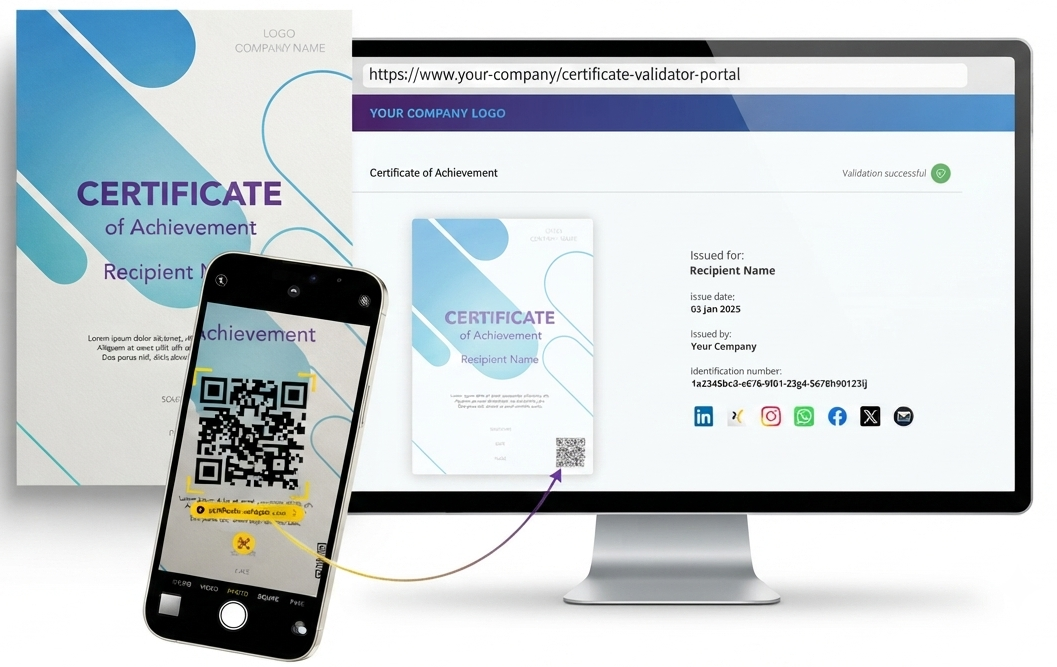
An electronic seal confirms the authenticity in each case. For universities, this means a certificate is created digitally once and can be verified an unlimited number of times, via QR code or a validation page, without the examination office having to be involved again.
The eIDAS 2.0 Regulation, in force since May 2024, creates the legal framework for qualified electronic signatures and the EU Digital Identity Wallet. By early 2027, every EU member state must provide its citizens with at least one compliant wallet, a legal deadline, not a goal.
The administrative pressure on universities is also growing due to:
The first rollout stage of the EUDI Wallet will initially focus on personal identity documents such as national ID cards or driver's licenses, educational credentials will only follow in a later phase. Universities that already rely on verifiable digital formats today are nevertheless prepared for this development.
The biggest advantage lies in automation. As soon as a grade is recorded in the campus management system, the certificate can be created and sent automatically via API or CSV import.
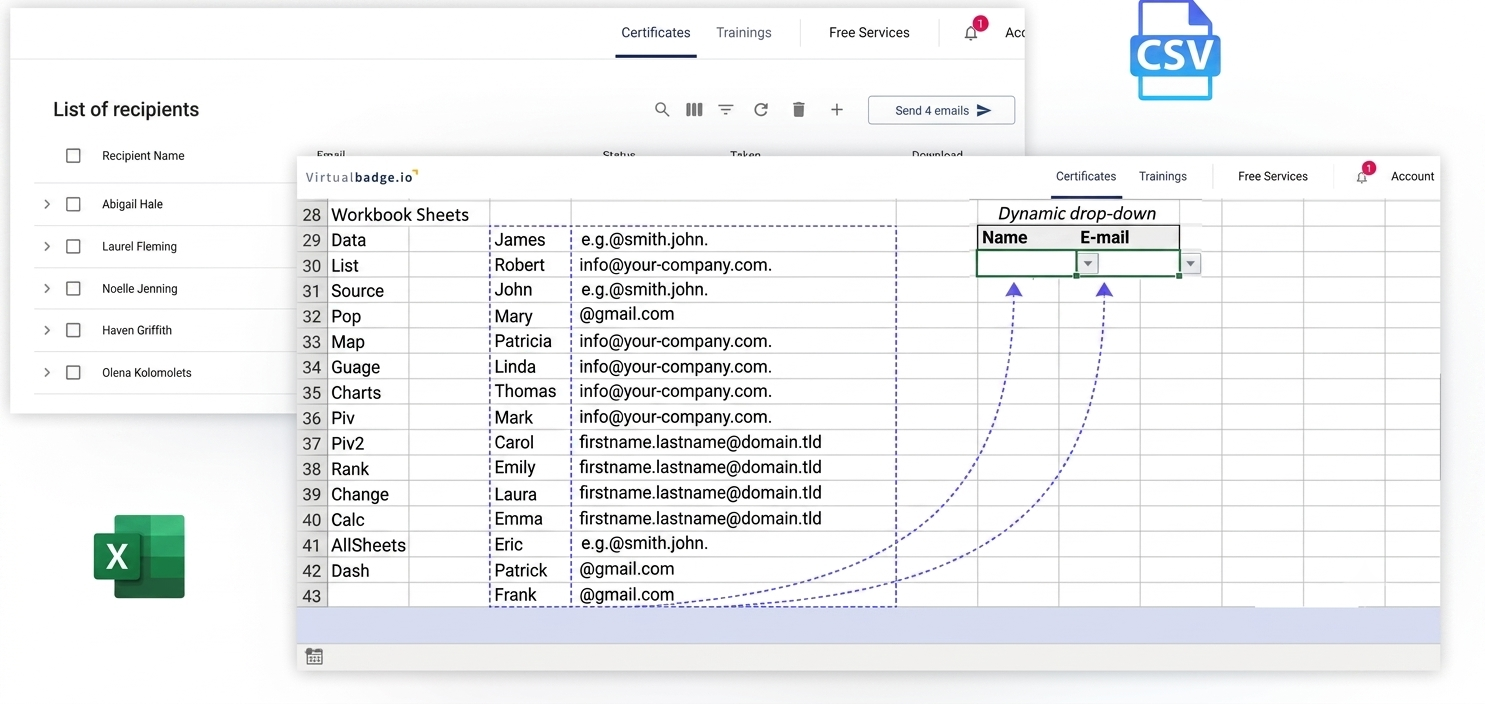
Manual signatures, envelope stuffing, and postal mailing are eliminated, as are many requests for certified copies, since students can share their credential themselves at any time.
Cryptographic signatures simultaneously protect against forgery. Any manipulation of the document invalidates the signature. A QR code leads to a validation page that confirms the issuer and content and can be hosted on the university's own domain, GDPR compliant and without recipients needing a user account.
Less regulated documents such as certificates of participation and language course certificates are suitable for getting started, before Transcripts of Records and finally degree certificates with a qualified electronic signature follow. The Portuguese educational institution Lisbon Digital School has fully digitized its certificate issuance this way and today issues credentials to its students automatically and verifiably, as described in the success story.
For more information, read: GDPR for Credentials: Secure and Compliant Issuance
Students receive their certificate immediately after the grade is recorded, without waiting for printing and mailing. The credential can be accessed via smartphone at any time and shared with one click on LinkedIn or in application portals.

Since the signature is embedded directly in the document, verifiability remains independent of the issuer's system. Anyone who needs their certificate years later for a new job application already has their own copy on hand, without having to contact the examination office again.
This also pays off for international applications. European Digital Credentials follow a format that is understood in all EU member states and speeds up recognition procedures.
The shift toward verifiable digital credentials is hard to stop. Universities that start early with a manageable pilot project, for example with certificates of participation or a single certificate program, gain experience and avoid time pressure during the later rollout.
Virtualbadge.io offers cryptographically signed certificates with a dedicated validation page on the university's own domain, GDPR compliant and without a user account for recipients. Integration into existing campus management systems takes place via API or CSV import. Schedule a free demo and see how your examination office can be relieved today.
What is the difference between a digital certificate and a PDF scan?
A digital certificate contains embedded metadata and a cryptographic signature that confirms its authenticity. A PDF scan is merely an image of the paper document with no way to verify it.
How long does it take to introduce digital certificates at a university?
A pilot project can start within a few weeks, for example with certificates of participation. The full rollout depends on the number of document types and the extent of system integration.
How does Virtualbadge.io protect personal data in certificates?
The platform stores data on servers within the EU and meets GDPR requirements. Recipients do not need their own user account, which further minimizes the amount of data collected.
* You can find the organisation ID in the URL when you access your LinkedIn Company page as an admin.


Marketing

Sep 24, 2026

5 min
A note on how we write: we use AI tools to help with research and drafting. Every article is then reviewed, edited and fact-checked by someone on the Virtualbadge.io team before it goes live. The final word is always human.

Use Virtualbadge.io to design and send digital certificates that create trust - in less than 10 minutes.
%20(1).svg)