No user accounts required for your recipients -
Start your 7-day free trial now!

How automated workflows turn passed exams directly into verifiable digital badges


With exam-driven badge issuance, passing an exam automatically triggers the creation and delivery of a digital badge. The result, name, and exam date move directly from the exam system into the badge platform, which generates a personalized, verifiable badge from them within seconds.
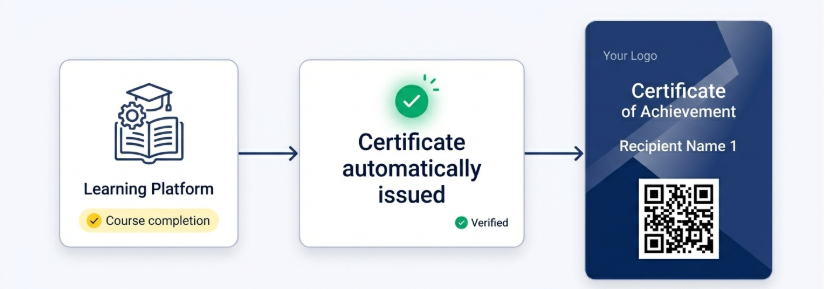
No more copying data into templates, no individual email dispatch, no waiting time for the examinee: all of this is eliminated compared with manual issuance. Certification bodies with hundreds or thousands of exams per month need exactly this to keep processing times short and error rates low, especially for exams with extensive documentation requirements.
Technically, a clear chain unfolds: The exam system reports a passed result, the badge platform fills a preconfigured template with the individual details and sends the finished badge, including a verification link, by email to the examinee.
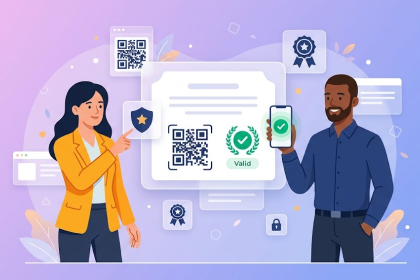
Issuer, award criteria, achievement, and issue date are embedded in the badge itself as metadata following the Open Badges standard (Open Badges 2.0 or 3.0). This data is cryptographically secured, can be checked via QR code scan on a branded validation page, and cannot be altered afterwards, which makes a badge significantly more forgery-proof than a simple PDF certificate.
There are three common ways to connect to the exam system:
Binding exam standards and extensive documentation requirements shape the everyday work of certification bodies. With every manual issuance, incorrect names, faulty exam titles, or delayed deliveries easily creep in, errors that weigh especially heavily for regulated qualifications.
If the data instead flows directly from the exam system into the badge platform, these sources of error almost disappear on their own, and every issuance is logged at the same time. Documentation obligations toward accreditation bodies can thus be met much more easily.
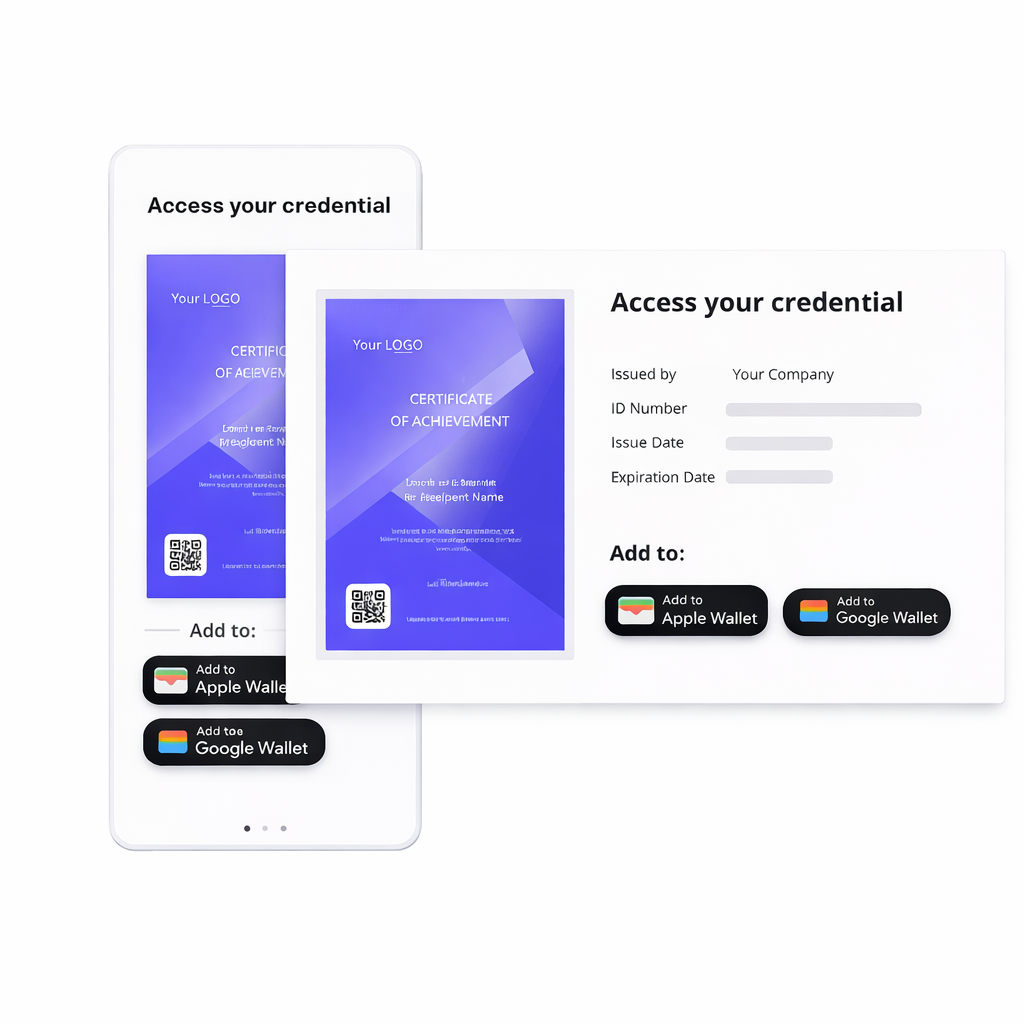
Organizations with multiple locations or exam centers also benefit, as central control becomes possible: Templates and award criteria are defined centrally, while individual locations issue the badges independently. The Organization Hub from Virtualbadge.io logs every single issuance step and thus facilitates quality assurance and audits, with consistently GDPR-compliant data storage on European servers.
It starts with a brief assessment: How many exams take place per month, which data is collected, and where have delays occurred so far? This is followed by selecting the suitable integration method, configuring the certificate template with logo and required fields, and a test run with a small group before the workflow goes live for all exams.
For the participants themselves, this pays off immediately:

At the same time, every shared badge carries the name of the issuing organization further and thus strengthens its visibility in the professional environment.
Anyone who uses exam results as an automatic trigger for badge issuance saves time, reduces errors, and strengthens trust in their own certification. Participants receive verifiable proof immediately, employers verify authenticity via QR code, and the organization benefits from seamless documentation.
Whether API integration, Zapier, or CSV upload, getting started can be adapted to the existing technical infrastructure. Book a free demo and see how Virtualbadge.io automates badge issuance.
What happens if an exam is not passed?
Only passed results trigger badge issuance. Virtualbadge.io creates and sends badges exclusively for qualifying results.
Can badges be revoked afterwards?
Yes. If a result later turns out to be incorrect, the badge can be blocked via the dashboard, and the validation page shows the updated status.
Is integration possible without programming knowledge?
Yes. Zapier connects the exam system without a single line of code, and alternatively, CSV upload is suitable for manually exported result lists.
How is personal exam data protected?
All data is stored on European servers and processed in compliance with GDPR.
* You can find the organisation ID in the URL when you access your LinkedIn Company page as an admin.


Marketing

Oct 6, 2026

5 min
A note on how we write: we use AI tools to help with research and drafting. Every article is then reviewed, edited and fact-checked by someone on the Virtualbadge.io team before it goes live. The final word is always human.

Use Virtualbadge.io to design and send digital certificates that create trust - in less than 10 minutes.
%20(1).svg)